It’s the week before Thanksgiving, and I’m sitting at a diner in Park Slope with a cup of black coffee and nothing to do. The weather is unseasonable and I feel agitated. Since leaving my job in January, I’ve spent a lot of time trying to fill the void. Most of my attempts to find meaningful things to do have ended in boredom. One of the reasons I think this happens is because I always try to make plans that go too far ahead of time. As a result, I usually rush to get as much done as I can in the little time I have. This afternoon is no different.
After checking the time again, I decided to visit a local thrift store I’d never actually looked into. I’ve passed it several times since moving to the area, but I’d never ventured inside. Part of that is probably because of the sign hanging above the entrance. The sign says “Linens & Textiles” in faded letters. I connect the words with dusty, worn curtains and stained bedding and almost never give them a second thought.
However, today I do enter the store. Once I enter the store, I’m immediately hit with the smells of old clothes, dust, and mildew. The air is heavy and thick, and I need to move through layers of old coats and broken umbrellas to reach the first rack of clothes. When I look through the first rack of clothes, I see mostly the same things I would have expected to see. Old jeans, faded t-shirts from the early 2000s, etc.
I continue walking down the aisle, until I reach the back of the store. I see a small section labeled “linens & textiles” and I pull out the contents. There are piles of stained bedding, torn tablecloths, and several shelves of what appear to be inexpensive looking curtains.
As I rummage through the bin, I see a blue object peeking out from under a stack of faded flower-printed bedding. I dig through the pile and find a hand dyed textile with the most beautiful shibori pattern. I hold it up to the light and take a closer look. I couldn’t believe what I was seeing.
This textile is obviously of high quality and handmade. If it were in a vintage boutique today, I wouldn’t be surprised if it was selling for hundreds of dollars. But here, in this thrift store, it seems to have been stuck. I kept digging and found a vintage batik from Southeast Asia, a hand-blocked Indian cotton with gold trim, and a hand embroidered piece with what appeared to be real silk.
In that moment, I realised— I had been thrifting incorrectly my whole adult life. The best treasures can be found in the least obvious places in the thrift store. Sections of the store that most people overlook.
Since then, I have become obsessed. I have been to 27 thrift stores in New York City, meticulously going through each store to find their textile sections. I have been stunned by what I have found, and the lessons I have learned about why these sections are so neglected.
So, let’s talk about the treasures I’ve found in these sections. I’ve found vintage silk scarves from famous designers that can be easily used as a traditional scarf or headband. I’ve also found scarves that can be wrapped around your purse or used as a decorative element. Additionally, I’ve found many scarves that can also be framed as art.
Tablecloths (especially round ones) are great to use as wrap skirts or capes. To create a skirt, simply wrap the tablecloth around your waist and tie with a belt. To create a cape, simply cut the tablecloth once. Curtain panels, especially those made of natural fibres, can also be easily turned into simple tunic dresses or tops.
Also, vintage sheets with interesting patterns tend to have much higher thread counts and softer cotton than modern sheets. Vintage sheets with unique designs can be easily repurposed into simple summer dresses, tops, or coordinating outfits.
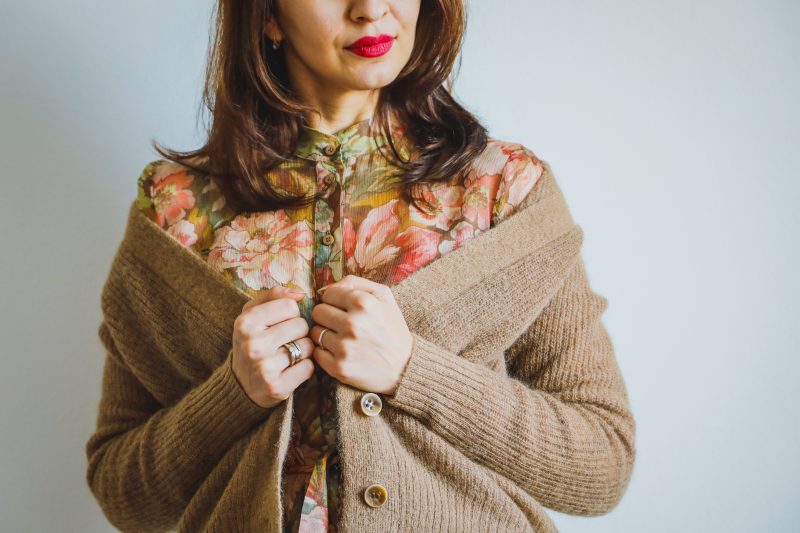
Even shoppers who struggle with crafting can repurpose vintage textiles as oversized scarves or wraps without altering them. I have taken a number of vintage tablecloths and turned them into shawls by simply draping them over my shoulders. In doing so, I have brought attention to the intricate crochet or embroidery details on the edges of the cloth.
“People do not see textiles as potential fashion options. They are looking for pre-made garments to wear. However, if you train yourself to visualize the potential instead of the completed garment, everything changes,” said Mei-Lin, the owner of Threadbare Studios in Brooklyn.
One of the first steps to identifying a high-quality material is to identify the quality of the material. Tablecloths with rolled hems and hand-needlework detail are likely to be made of high-quality material. Faded curtains made of natural fibres (like linen or cotton) can potentially be turned into shirts, tunics, etc.
Use your hands, not just your eyes, suggests textile artist Juana Rodriguez. Run your hands gently over the fabric. Is it cold to the touch? That could mean it is silk. Has it a certain weight and drape? That could mean it is high-quality wool or linen. Your sense of touch will tell you much more about the quality of the fabric than your visual assessment.
My biggest success story has been buying an Hermès scarf. It was bought in the 1960s. When I bought it, it had a small stain in the top-right corner and it was faded. It cost me $2.00. After washing it gently with a silk-specific detergent, the stain disappeared. Today, an Hermès scarf from the 1960s sells for $500+ in vintage shops.
Many of the items I have found in the textile sections of thrift stores can be used as-is. Scarves are a great place to start. Look for silk, wool, or fine-cotton squares hidden amongst the polyester. I have found many Vera Neumann scarves (Vera Neumann is identified by her name printed in the corner of the scarf) and many other designer pieces. These can be worn as traditional scarves or headbands. They can be draped over the handle of your purse or used as decorative elements. Many can also be framed as art.
Round tablecloths can be turned into wrap skirts or capes. Simply wrap the cloth around your waist and tie with a belt. Square tablecloths can quickly be turned into ponchos with a single cut. Curtain panels (particularly those made of natural fibres) can easily be turned into simple tunic-style dresses or tops.
Vintage sheets in unique patterns have higher thread counts and softer cotton than contemporary sheets. Sheets in unique designs can easily be repurposed into simple summer dresses, tops, or coordinating outfits.
Even the most craft-challenged shopper can repurpose vintage textiles as oversized scarves or wraps with zero modifications. I have taken many vintage tablecloths and used them as shawls by simply draping them over my shoulder. In doing so, I have highlighted the intricacy of the crochet or embroidered details on the edges of the cloth.
“All of this comes down to seeing the possibilities rather than what the item looks like today,” states Anita Chen, a vintage dealer specializing in repurposing textiles. “Most people are extremely literal. They see a tablecloth and cannot imagine anything beyond putting it on a table. Fabric is fabric. The only limits are the limits of your imagination.”
Another major advantage of finding textiles in thrift stores is the pricing. While the prices for second-hand clothing have dramatically risen in recent years (due in part to the rise of second-hand shopping and resale culture), the textile sections remain relatively inexpensive.
No one is competing for these items, explains Sam Rivera, a former manager at a thrift store. We price these items as low as possible to encourage sales because they consume a lot of our storage space and we don’t sell them nearly as fast as we do clothing. For instance, a beautiful tablecloth could sit on the shelf for months unless we practically give it away.
This pricing discrepancy is an excellent opportunity for fashion-minded shoppers. I have amassed enough quality textiles to adopt a one-in/one-out policy for my textile collection. Recently, I purchased a 1970s Indian cotton bed spread with an incredible peacock print created via block printing. It is large enough to create a dress, skirt, and multiple tops, all for $6.99.