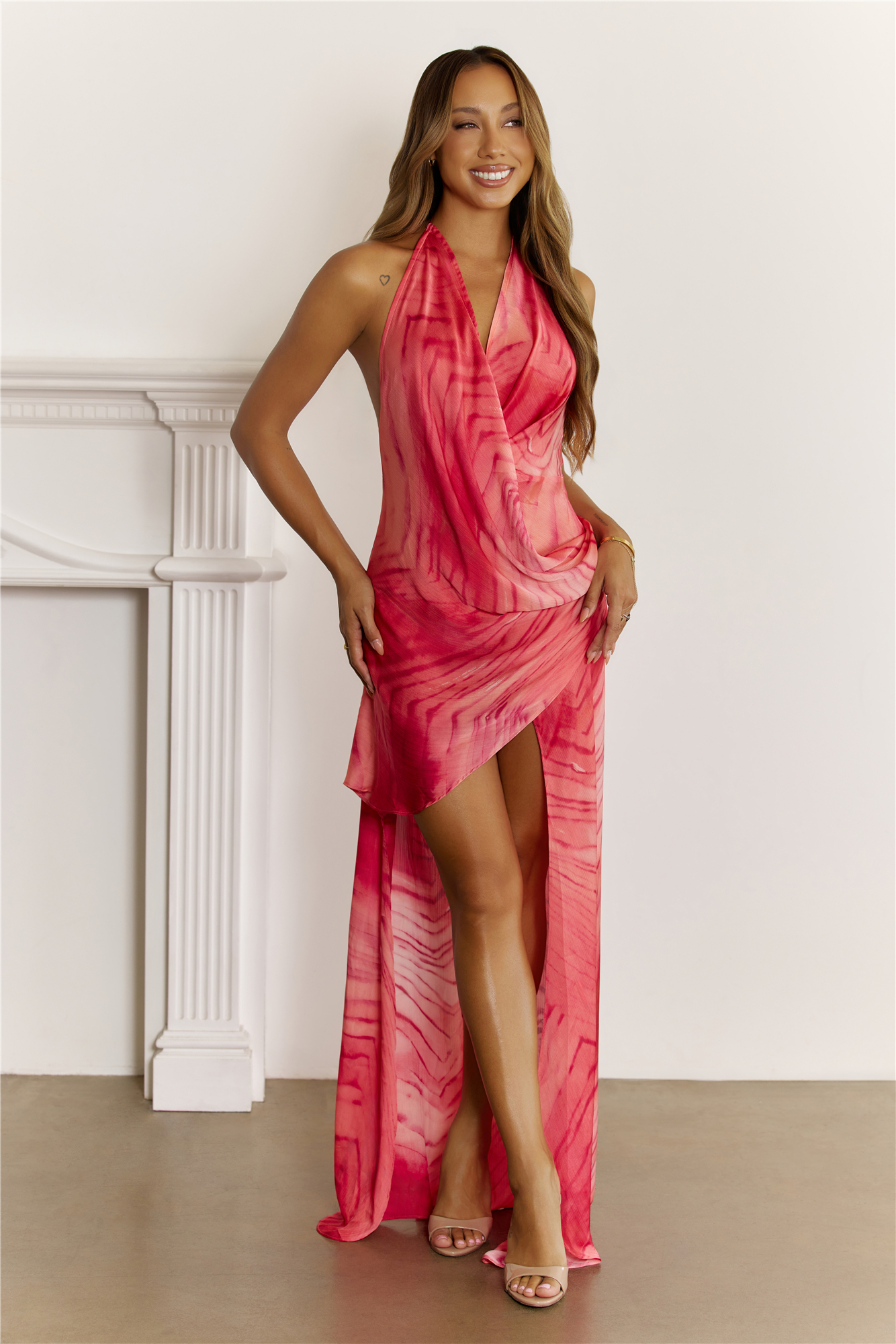
A good nude wrap dress earns its place by doing two things at once: sitting close enough to the body to suggest shape, and skimming enough to forgive the parts you’d rather not announce. The wrap does the work here far more than the colour does. A proper wrap front, one that actually crosses and ties rather than a fake panel stitched to look like one, adjusts to the body wearing it, which is why the same style can look entirely different on two people and still work. Nude, meanwhile, is doing something specific and slightly harder than black: it has to match skin tones closely enough to read as a continuation of the body rather than a beige garment sitting on top of it, so the difference between a flattering nude and a flat one usually comes down to undertone, not shade name.
Fabric behaviour matters more than pattern in this category. Look for something with enough drape to fall rather than cling, a matte jersey, a fluid crepe, a soft satin with weight to it, because anything too thin or too stiff will either gape at the tie or sit like cardboard.
The ties themselves should be long enough to wrap fully round and knot with some ease left over, not strain across the waist, and the wrap point should sit where the natural waist actually is, not several inches above it.
Styling one is less about dressing it up and more about choosing what temperature you want the outfit to run at. A structured blazer over the top and a heeled sandal takes it into daytime event territory, a work presentation, a lunch that matters.
Strip the blazer back, add gold jewellery and a strappy heel, and the same dress moves into evening without changing anything structural. For daytime, a denim jacket or a soft knitted cardigan and flat sandals keep it grounded rather than dressed.
Occasion wise, this is the category to reach for whenever the brief is smart but not sharp: a christening, a garden lunch, a work drinks event, an interview where a full suit would overstate the moment. The nude wrap dress does the flattering work quietly, without asking the room to notice the effort, which is precisely why it keeps earning its place on the rail.
Top Picks