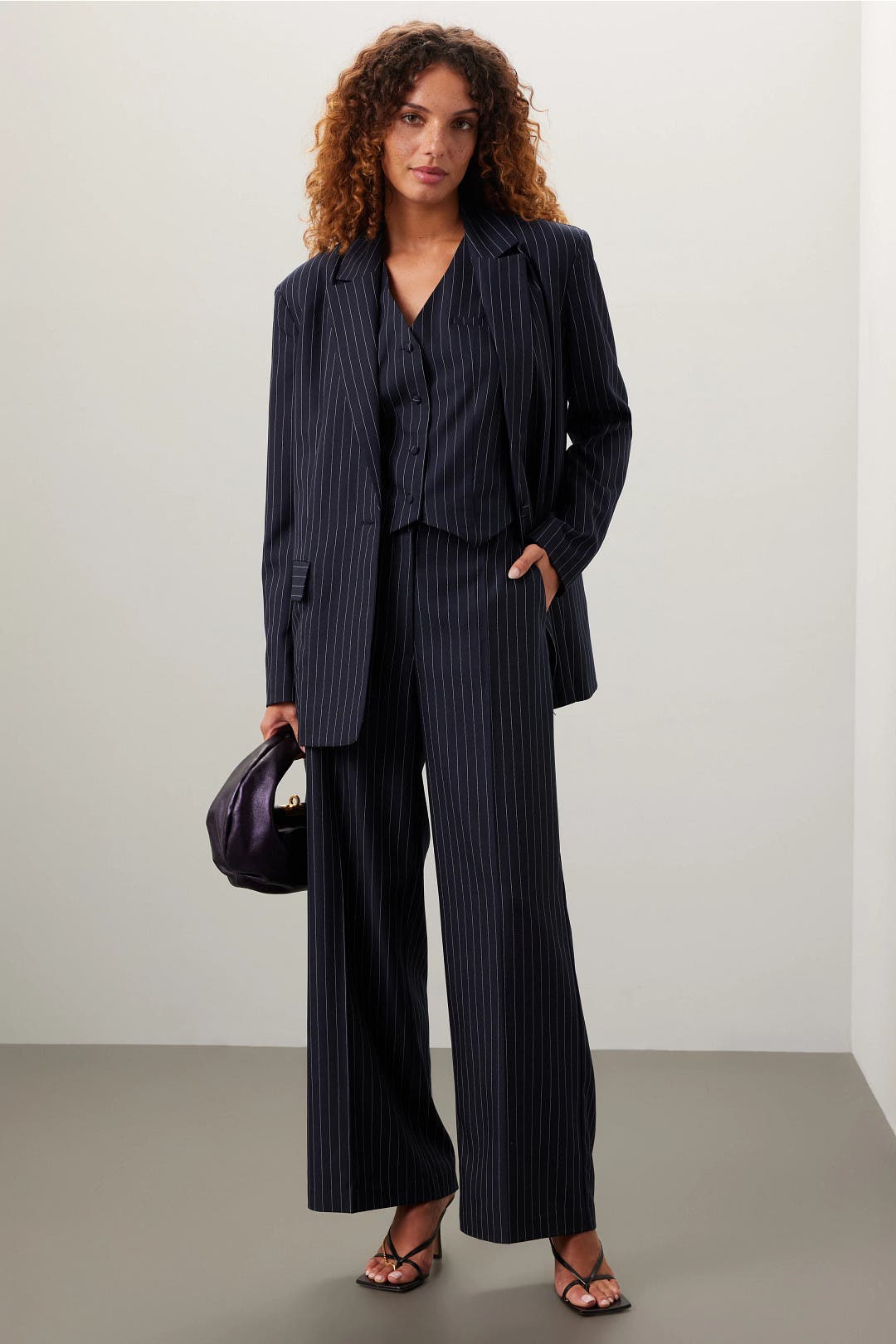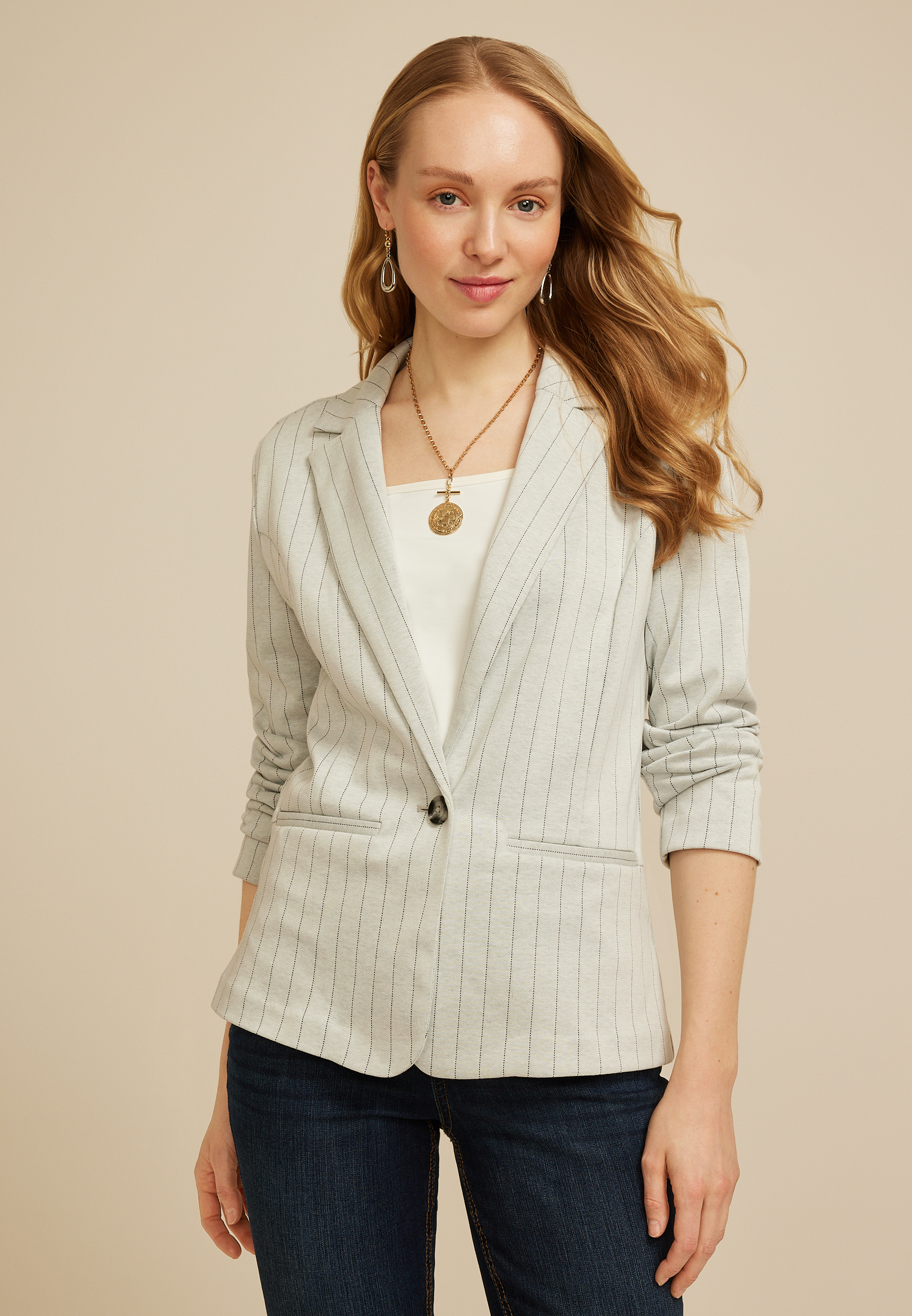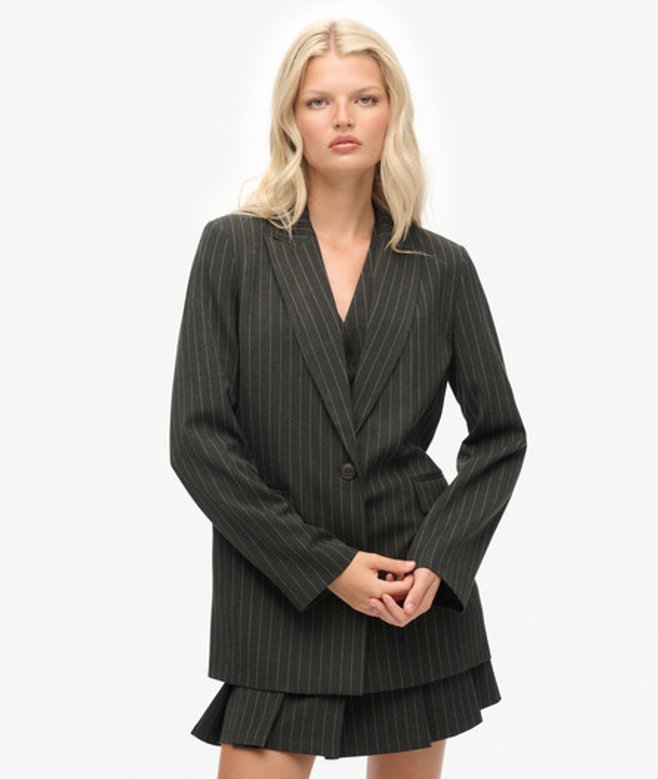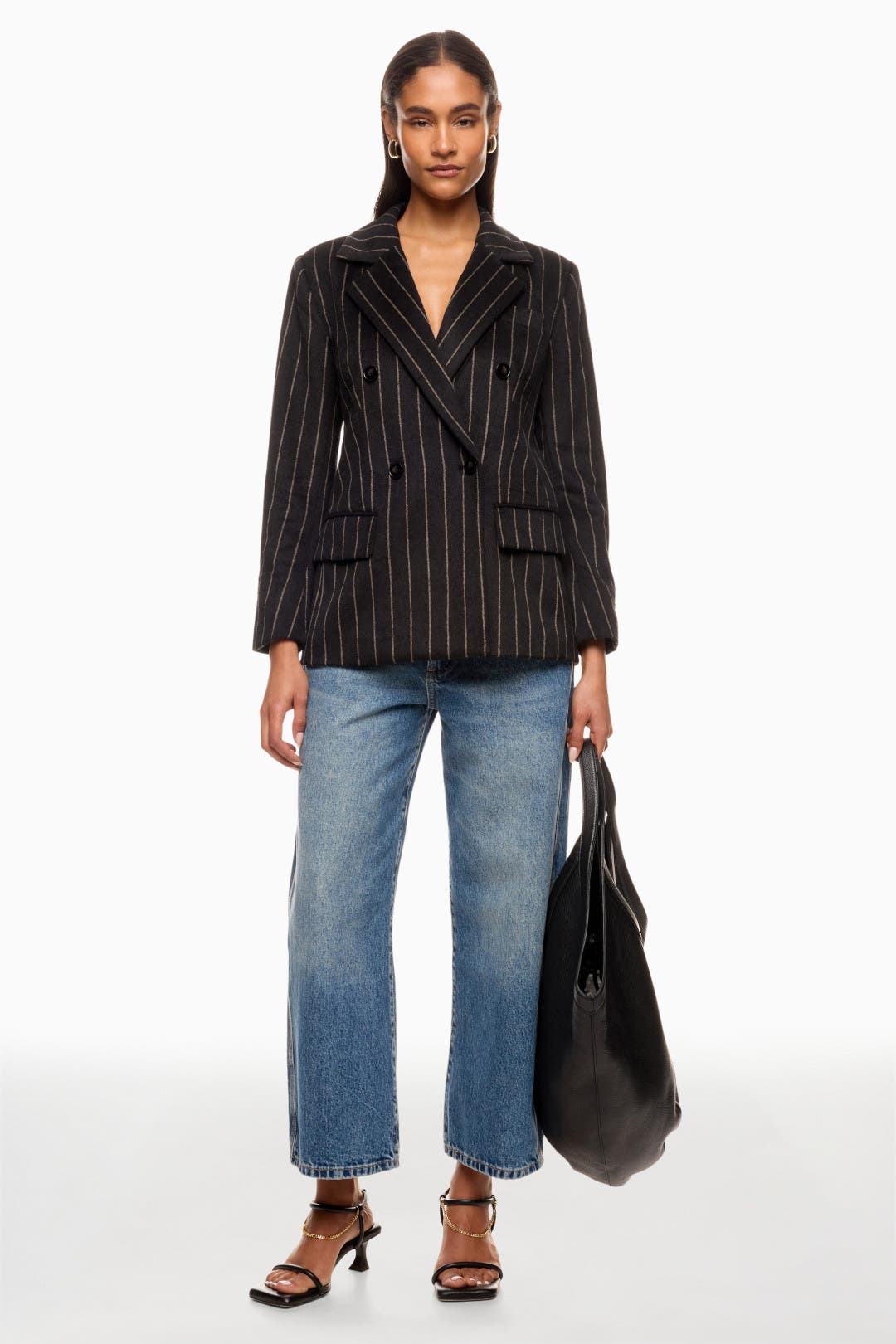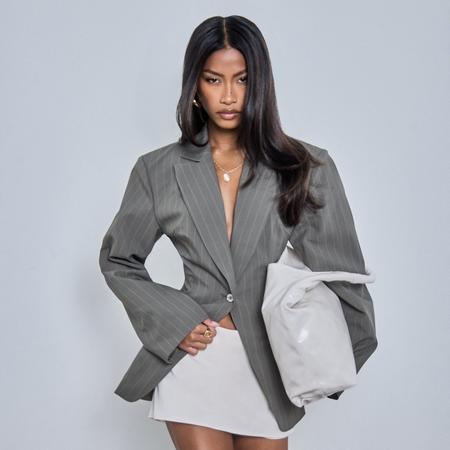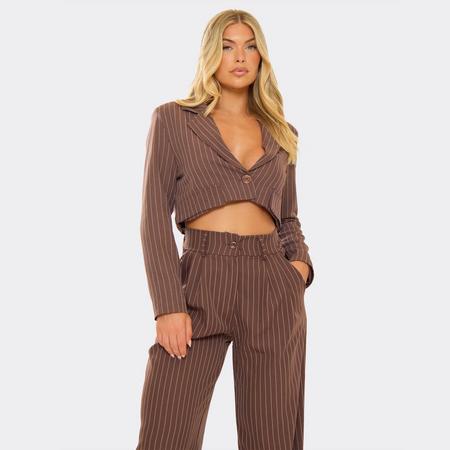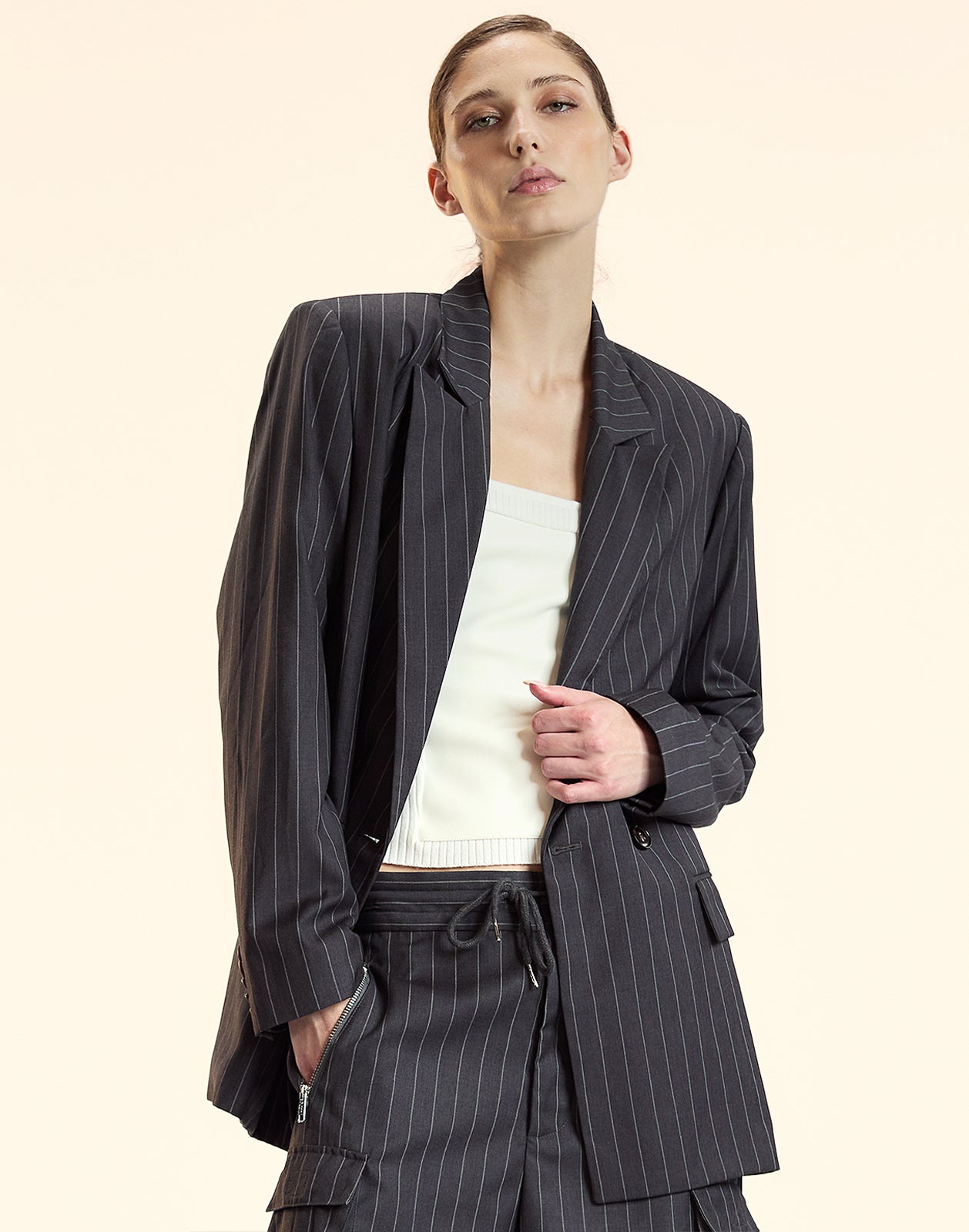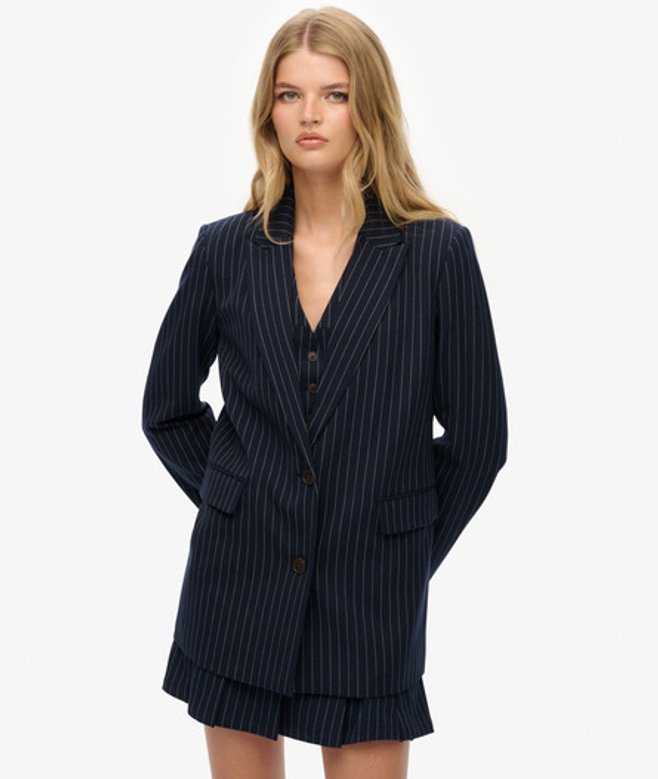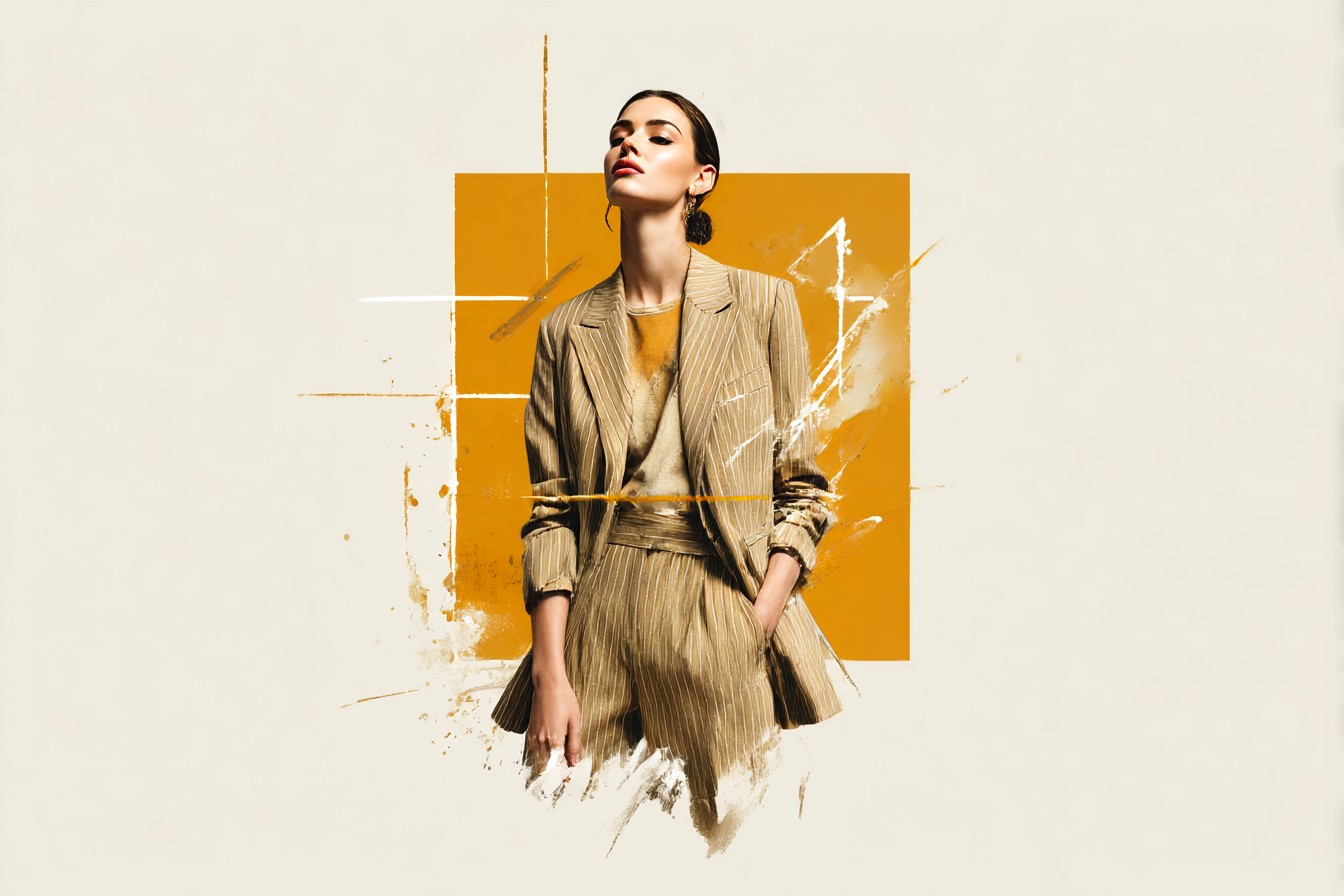
A pinstripe blazer earns its place through the stripe itself: how wide it is, how it’s spaced, whether it’s woven through the cloth or printed on top. The good ones use a fine, slightly irregular chalk stripe or a wider, more graphic line, always with enough contrast to read from across a room without tipping into fancy dress. Cheap versions print the stripe flat and stiff, so it sits on the surface of the fabric rather than moving with it. A proper wool or wool blend blazer drapes, creases where it should and falls back into shape, which matters more than people expect once the jacket is actually being worn and not just photographed on a hanger.
Fit is where most pinstripe blazers succeed or fail. The shoulder line should sit close without pulling, the lapel proportionate to the body rather than borrowed from an oversized menswear silhouette that swamps everyone equally.
A slight nip at the waist, even a small one, stops the whole thing reading like a uniform.
Sleeves should stop at the wrist bone, not creep past it, and the length should skim the hip rather than disappear into a longline coat shape, which reads dated fast.
Styling wise, the stripe does the work, so the rest of the outfit can afford to be plain. Worn open over a simple top and straight trousers, it looks like someone who dresses with intention rather than someone in a costume. Cropped underneath it, a plain white shirt with the collar left slightly undone looks sharper than anything more fussy. It takes denim well, particularly a straight or wide leg in a dark wash, which softens the formality without losing the shape. For evening, worn with nothing underneath but a simple vest and a slim trouser, it does something a plain black blazer cannot, adding pattern without adding noise.
Occasion wise, this is the jacket for anything that asks for polish without stiffness: client meetings, interviews, daytime events that tip into evening, or any situation where a plain blazer would look safe rather than considered. Pinstripe holds authority and personality in the same piece, which is precisely why it rarely gets left in the wardrobe once it earns a place there.
Top Picks