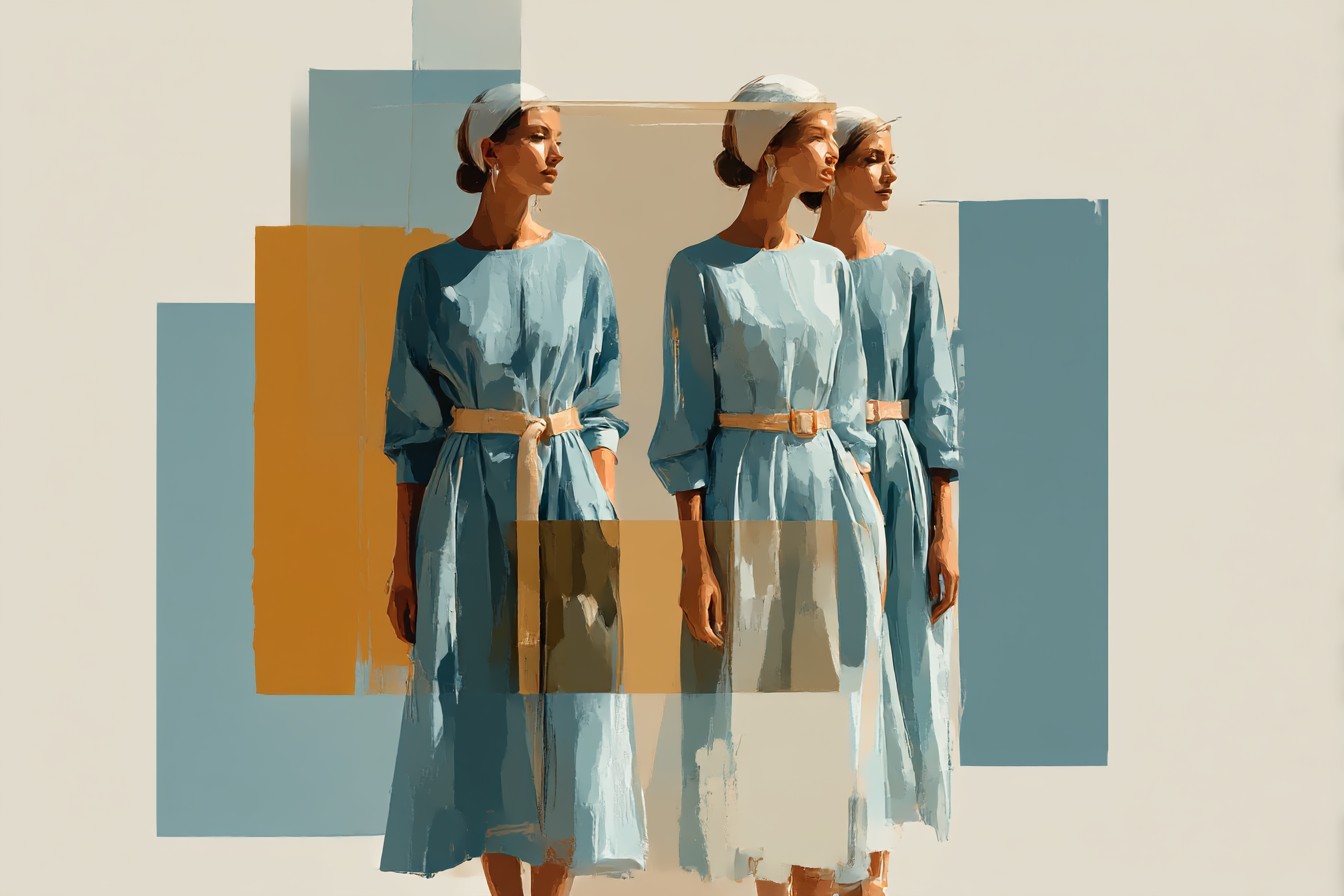
Powder blue sits in an odd, useful space between committed colour and neutral, and that is exactly why the midi length suits it so well. The shade needs a cut that gives it structure rather than softness on top of softness, so the best versions lean on a defined waist, a bias cut that moves properly, or a shirt dress silhouette with enough starch in the collar to stop the whole thing reading as pyjama adjacent. Fabric weight matters more than colour intensity here. A powder blue that is too thin and floaty tends to wash out against skin, while a slightly heavier cotton, a linen blend, or a fluid but substantial crepe holds its own and drapes with intention rather than clinging or collapsing.
The midi length itself is doing a lot of the work in making this colour wearable beyond spring occasions. Hit below the knee and above the ankle, and it reads considered rather than costume like, which a pastel shade can tip into if the proportions are wrong.
Look for a hemline that skims rather than swamps, and a waist definition that is either built in through seaming or added through a belt, because powder blue in a shapeless cut can start to look like scrubs rather than dressing.
Styling this colour well is about grounding it. Tan or camel leather, whether boots, a belt, or a structured bag, keeps it from feeling too soft. Gold jewellery warms it, silver sharpens it, and a contrast in texture, think a leather jacket over the top or a knit thrown over the shoulders, stops the whole look feeling one note.
Trainers pull it into daytime territory, while a heeled sandal or a fine strap sandal moves it straight into evening without needing a colour change.
Occasion wise, this is a shade that performs at daytime weddings, garden parties, and any warm weather event with a dress code that asks for something more considered than a sundress. It also works quietly well for smart office days in the warmer months, where the colour reads as fresh rather than try hard. What separates a good powder blue midi from a forgettable one is rarely the shade itself, it is the fit, the fabric hand, and whether the cut has been built to hold a shape rather than just hang there.
Top Picks