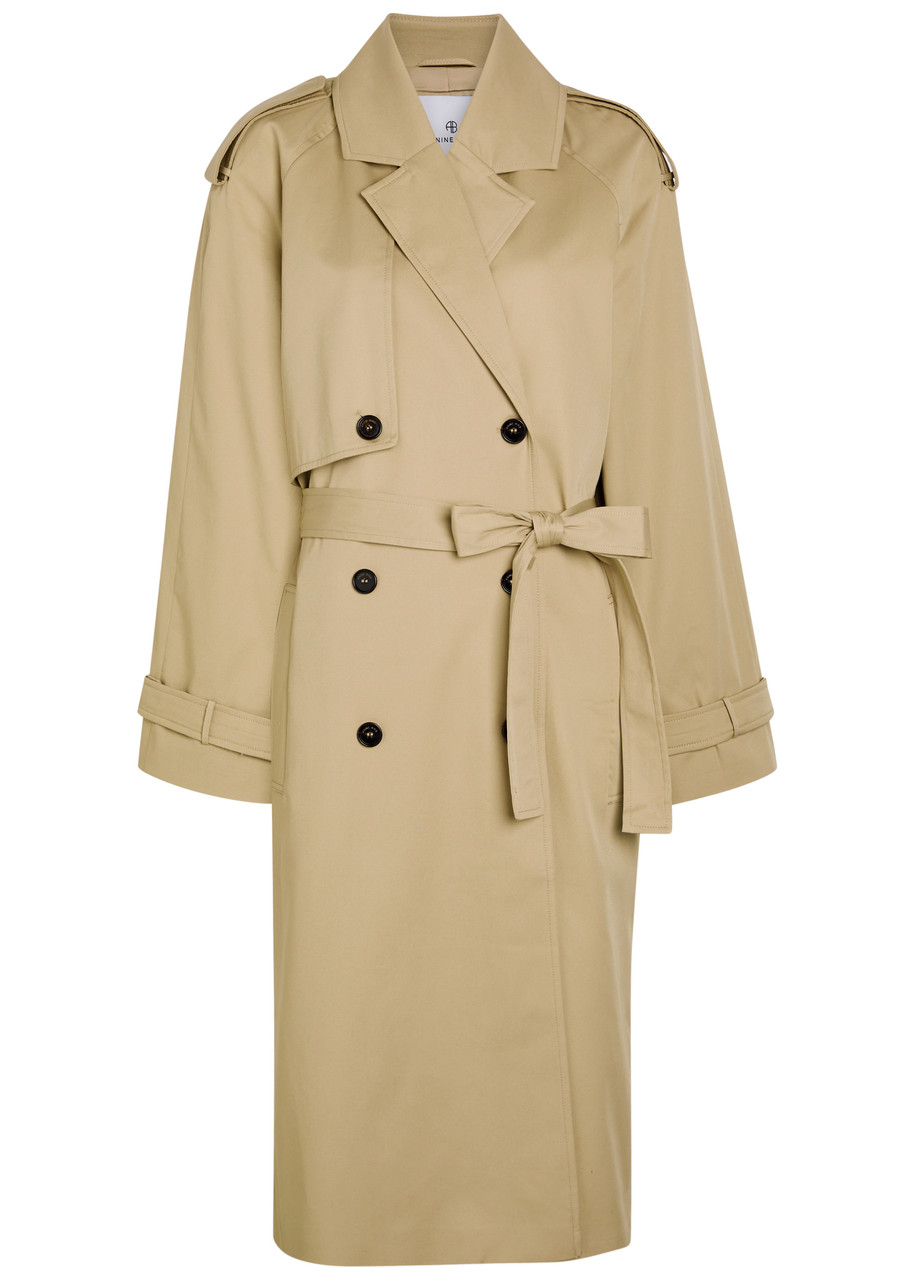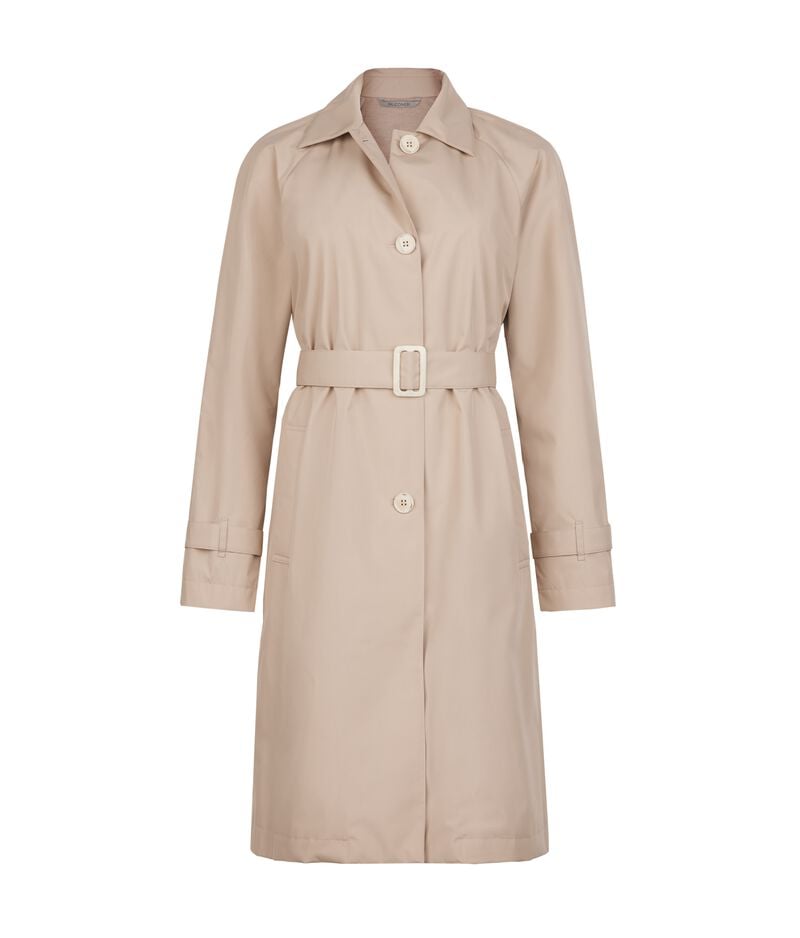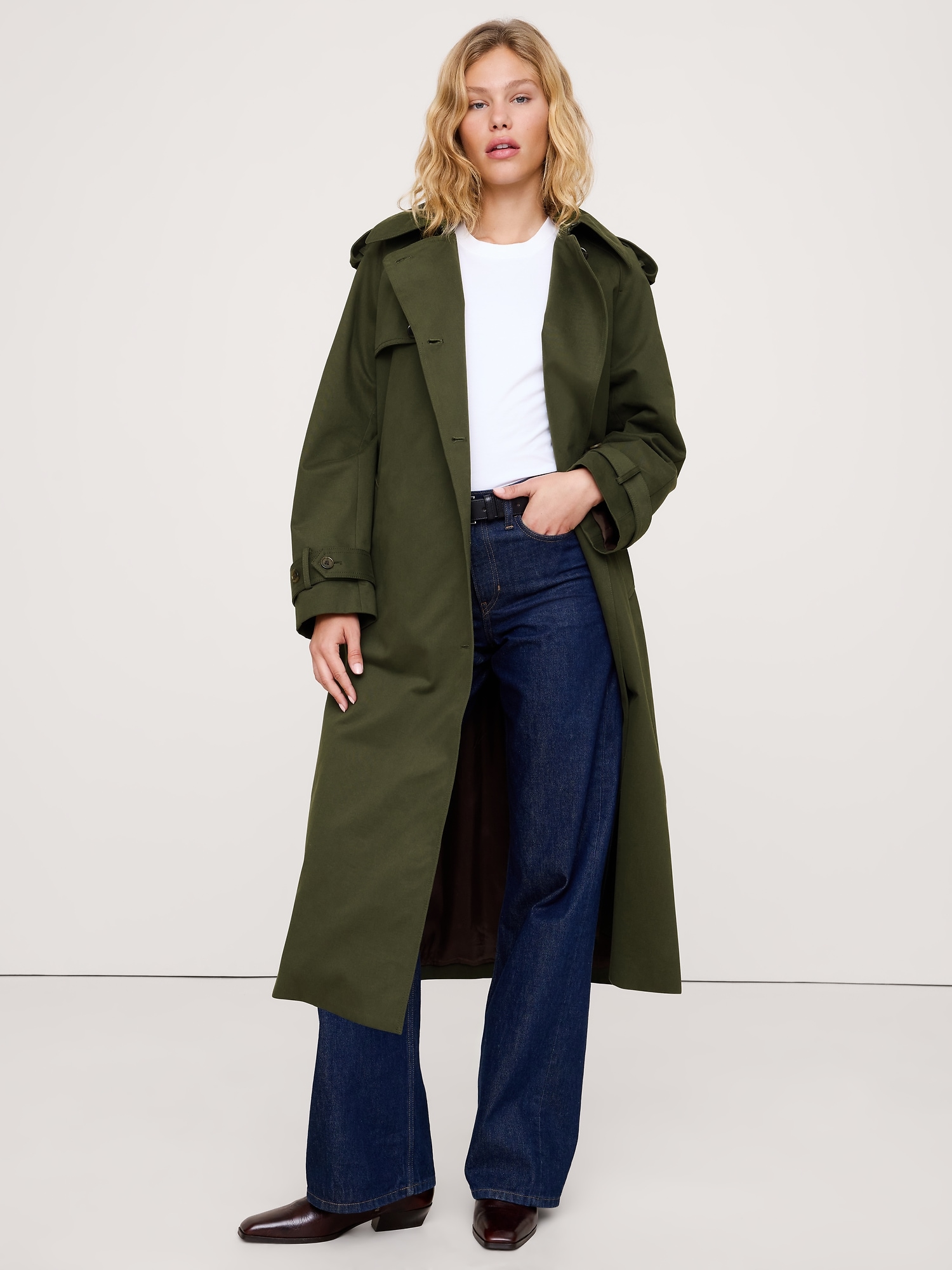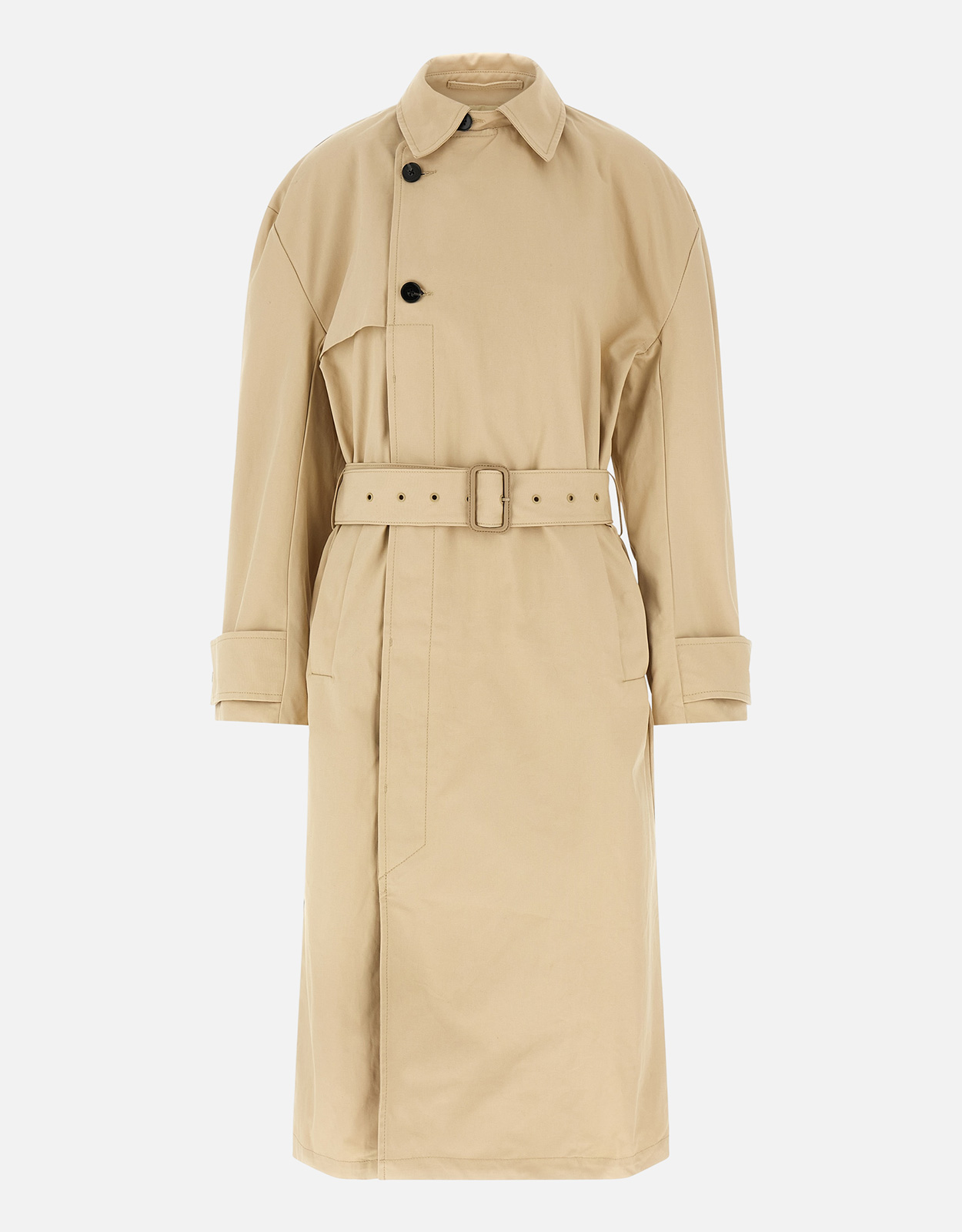
A good trench coat earns its place through construction, not branding. Look at the collar first: it should hold its shape and stand away from the neck rather than flopping, which usually comes down to a proper interfacing rather than a cheap fused lining. The belt matters more than most people admit, it needs real belt loops set at the natural waist, not decorative ones stitched too high or too low, because that single detail decides whether the coat skims or swamps. Cotton gabardine remains the fabric worth chasing, it has enough density to hold a crease and resist light rain without going stiff or plasticky. Anything too soft collapses into a cardigan shape by lunchtime, anything too heavy turns into hard work by mid afternoon.
Fit is where most trenches go wrong.
The shoulder seam should sit exactly on the shoulder bone, not drift down the arm, and there should be enough room through the back to layer a jumper underneath without pulling at the buttons.
Length is a matter of proportion rather than rule: below the knee reads formal and works over tailoring, just above the knee is easier with jeans and boots. The double breasted front with the storm flap is not decorative fussiness, it is what stops the coat gaping when the wind picks up, so it is worth choosing over a single breasted version if the coat is meant to do real outdoor work rather than sit as an office layer.
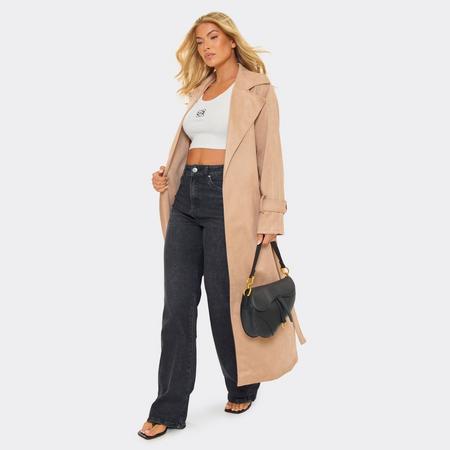
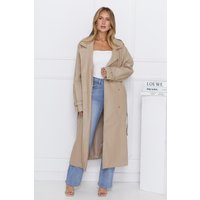
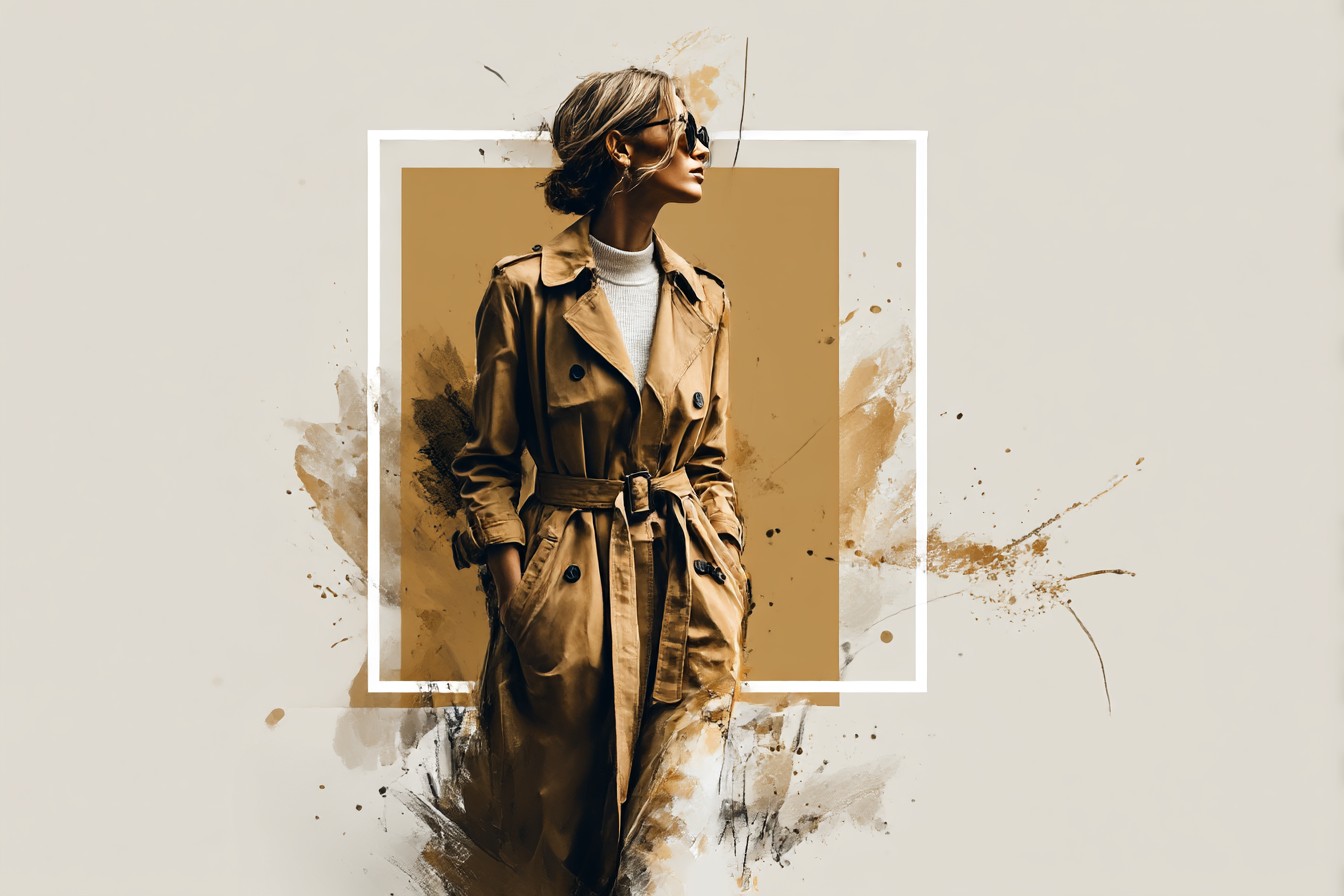
Styling it is less about matching and more about contrast. A trench works hardest over something with texture underneath, a ribbed knit, a slouchy shirt, tailored trousers with a slightly cropped ankle so the coat has room to move. Belted tight over a dress it turns formal enough for daytime events, worn open over denim it becomes the thing that makes an ordinary outfit look considered. Sleeves pushed up rather than left long changes the whole mood, from careful to slightly off duty.
Occasion wise, this is the coat for the in between moments, the client meeting, the early autumn commute, the wedding guest look that needs one more layer for the walk between car and venue. It photographs well because it holds a line, which is exactly why it has outlasted every passing coat trend for decades.
Top Picks