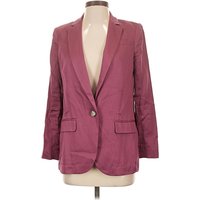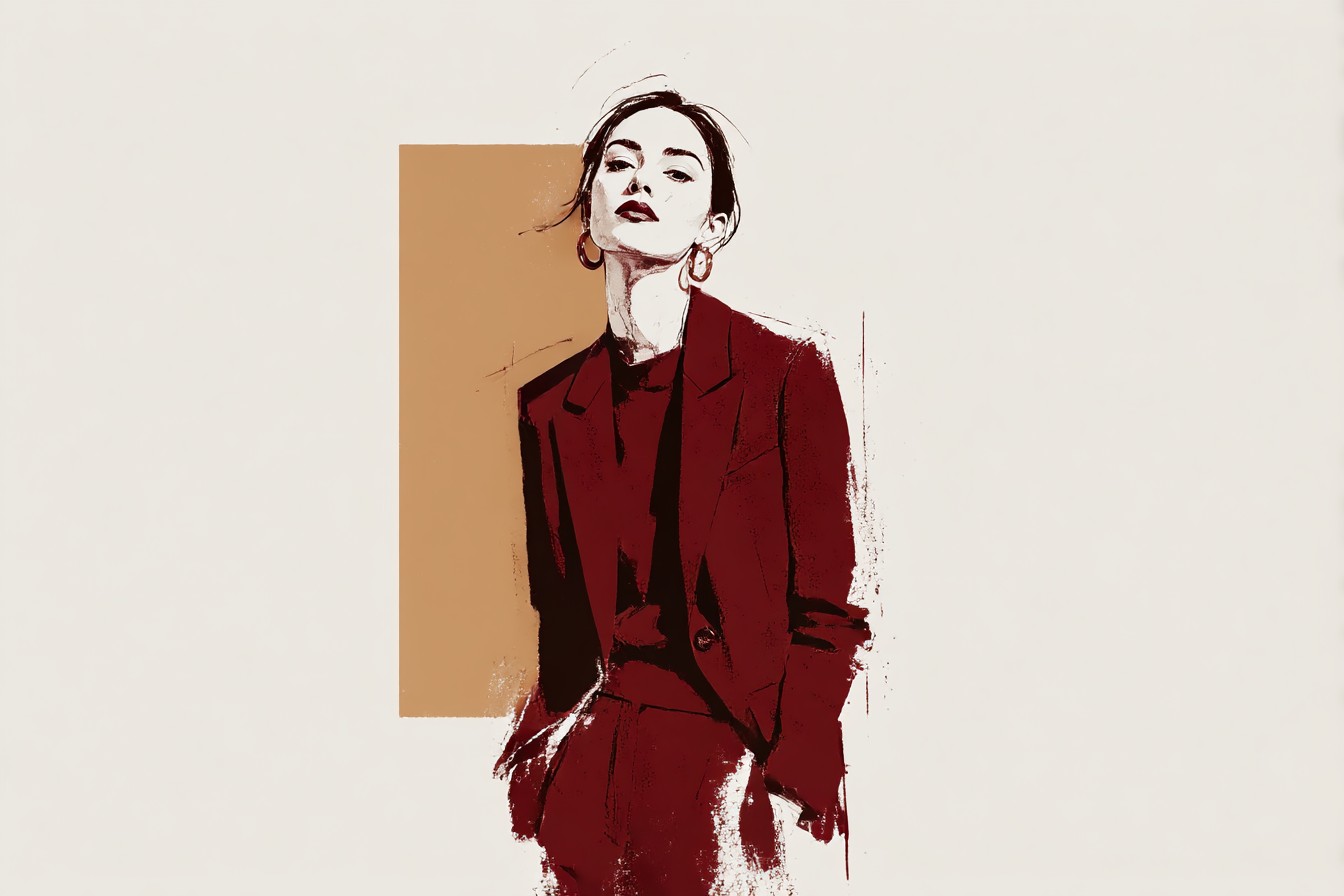
Burgundy does something a black or navy blazer simply cannot: it holds authority while still reading as considered. The colour sits close enough to neutral to work into a formal rotation, yet it carries enough warmth and depth to avoid the flatness that plain black can fall into under office lighting or on a dull afternoon. A good burgundy blazer earns its place through the exact tone chosen, and this matters more than people expect. Too blue and it verges on aubergine, too orange and it tips toward rust or terracotta. The versions worth owning sit in that true wine or oxblood register, deep enough to read as sophisticated rather than seasonal.
Fabric and construction decide whether the colour looks rich or cheap.
A wool or wool blend with a touch of structure holds its shape through the shoulder and lapel and drapes properly at the sleeve, while anything too synthetic tends to catch the light in a way that flattens the shade into something closer to plastic.
Look at the lining too, a half or fully lined jacket will sit better across the back and last through more wear. Fit should follow the same logic as any tailored jacket: shoulder seams sitting exactly at the shoulder point, sleeves finishing at the wrist bone, enough room through the chest to layer a jumper underneath without pulling at the button.
Styling it well means treating the colour as the statement and keeping everything else quiet. Cream, camel, grey and black all let the burgundy do the work, while denim in a mid or dark wash gives it an easier, less formal register for daytime. It sits naturally over a simple knit or shirt for the office, and just as easily over a slip dress or wide leg trouser for something after hours. Gold hardware and leather accessories in tan or oxblood tend to sit more naturally with this shade than silver does.
Occasion wise, it earns its keep across autumn and winter particularly, standing in for the reliability of navy while adding a bit more depth to festive dressing, client meetings, or interviews where a plain black jacket feels slightly too safe. It photographs well, holds its own against patterned pieces, and manages to look deliberate rather than seasonal, which is precisely what makes it worth the space in a rail.
Top Picks