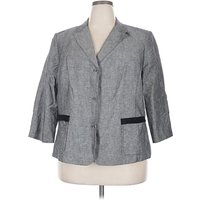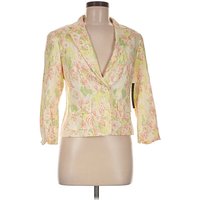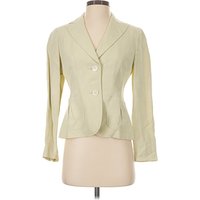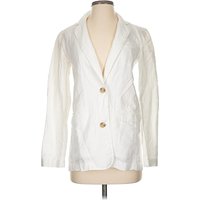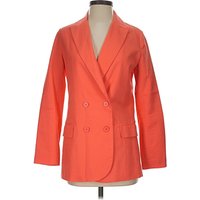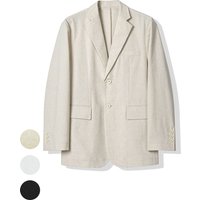
A good linen blazer earns its place through the way it moves, not just how it looks on a hanger. Linen has a natural slub and a slight stiffness when new, which is exactly what gives a blazer its shape without tipping into the rigidity of a formal suit jacket. The fabric softens with wear, creases in a way that looks deliberate rather than dishevelled, and breathes properly, which matters more than people admit once the temperature climbs. The ones worth owning tend to have a slightly relaxed shoulder, minimal padding, and a length that sits at or just below the hip rather than anything boxy or cropped. Structure should come from the cut, not from lining or interfacing that fights the fabric’s natural drape.
What separates a good version from a disappointing one is usually in the details that don’t show up in a photograph.
Check the weight of the linen, a fabric that’s too thin will wrinkle into something closer to a dish rag by midday. Look at the button stance and lapel width, both dictate whether the jacket reads as tailored or simply loose. A half lining or no lining at all is preferable in summer weight versions, since a fully lined jacket in linen defeats the point of choosing a breathable fabric in the first place.
Styling one is less about pairing and more about contrast. Worn over a simple slip dress or a plain cotton tee, it does the work of dressing something down or up without effort. With tailored trousers in a different tone, it reads as considered rather than matching. Rolled sleeves, an open front, and bare ankles push it towards the relaxed end. Layered over a shirt with the collar left slightly open, it moves easily into anything from a lunch to a client meeting that doesn’t need a full suit.
Occasion wise, this is the piece that solves the problem of dressing for warm weather events that still require a bit of polish, a summer wedding outside the dress code strictness, travel days where creasing is inevitable anyway, or office environments where air conditioning makes structure necessary but wool feels wrong. It photographs well precisely because it isn’t trying to look pristine. The right one looks better after a day of actual wear than it did straight off the rail.
Top Picks