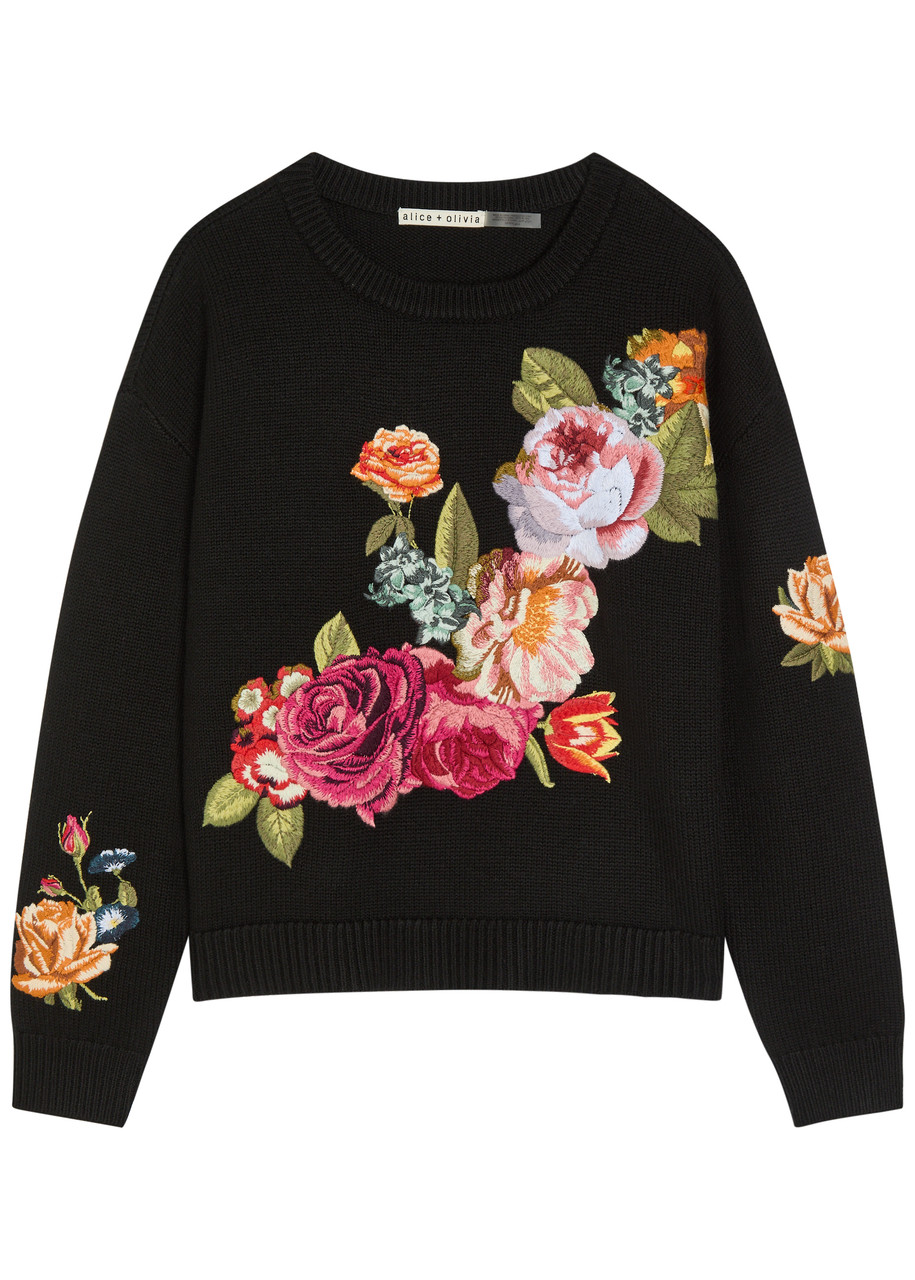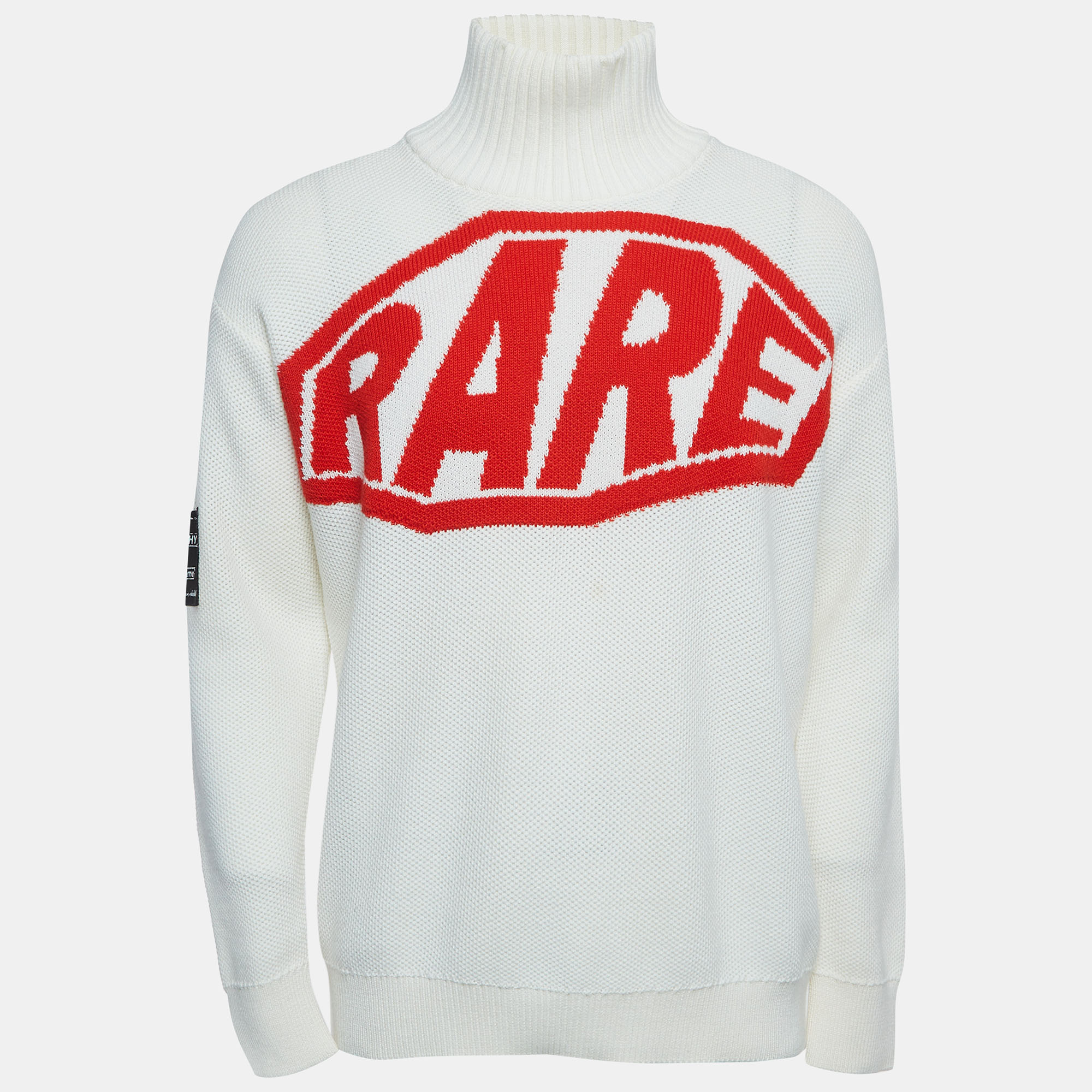
A good jacquard jumper does its work through texture rather than print, which is what separates it from anything with a motif simply stamped or printed onto flat knit. The pattern is built into the structure itself, raised and recessed in the same yarn, so it catches light differently depending on how you move, and that dimensionality is what makes it look considered rather than decorative. The best versions tend to work within a tonal or two colour palette rather than a busy mix, because the jacquard technique already provides enough visual interest without needing six shades competing for attention. Look for a knit with body and a bit of density to it, something that holds its shape at the cuff and hem rather than a thin, floppy gauge that will lose the pattern definition after a couple of washes.
Fit matters more with jacquard than with a plain jumper, because the pattern reads best when the knit isn’t stretched or pulled out of shape across the body. A slightly relaxed cut through the shoulder and body, without being oversized to the point of losing structure, lets the motif sit properly rather than distorting.
Cropped or fitted versions can work too, but they demand a tighter knit to keep the pattern crisp.
Styling wise, this is a jumper that wants simple partners. Straight leg trousers or well cut denim let the knit be the focal point rather than competing for attention, and a plain shirt collar peeking out underneath adds a bit of structure without diluting the pattern.
It layers well under a wool coat or an unlined blazer for the transitional months, and it’s forgiving with proportion, so it pairs equally well with a slim trouser or a fuller skirt depending on what balance you’re after.
Occasion wise, this sits comfortably between smart and relaxed. It has enough presence for daytime meetings or lunches where a plain knit might read as an afterthought, but it’s still comfortable enough for weekend wear, travel days, or anywhere you want to look put together without trying particularly hard. Autumn and early winter are its natural season, when the texture and weight actually earn their place rather than becoming a burden.
Top Picks