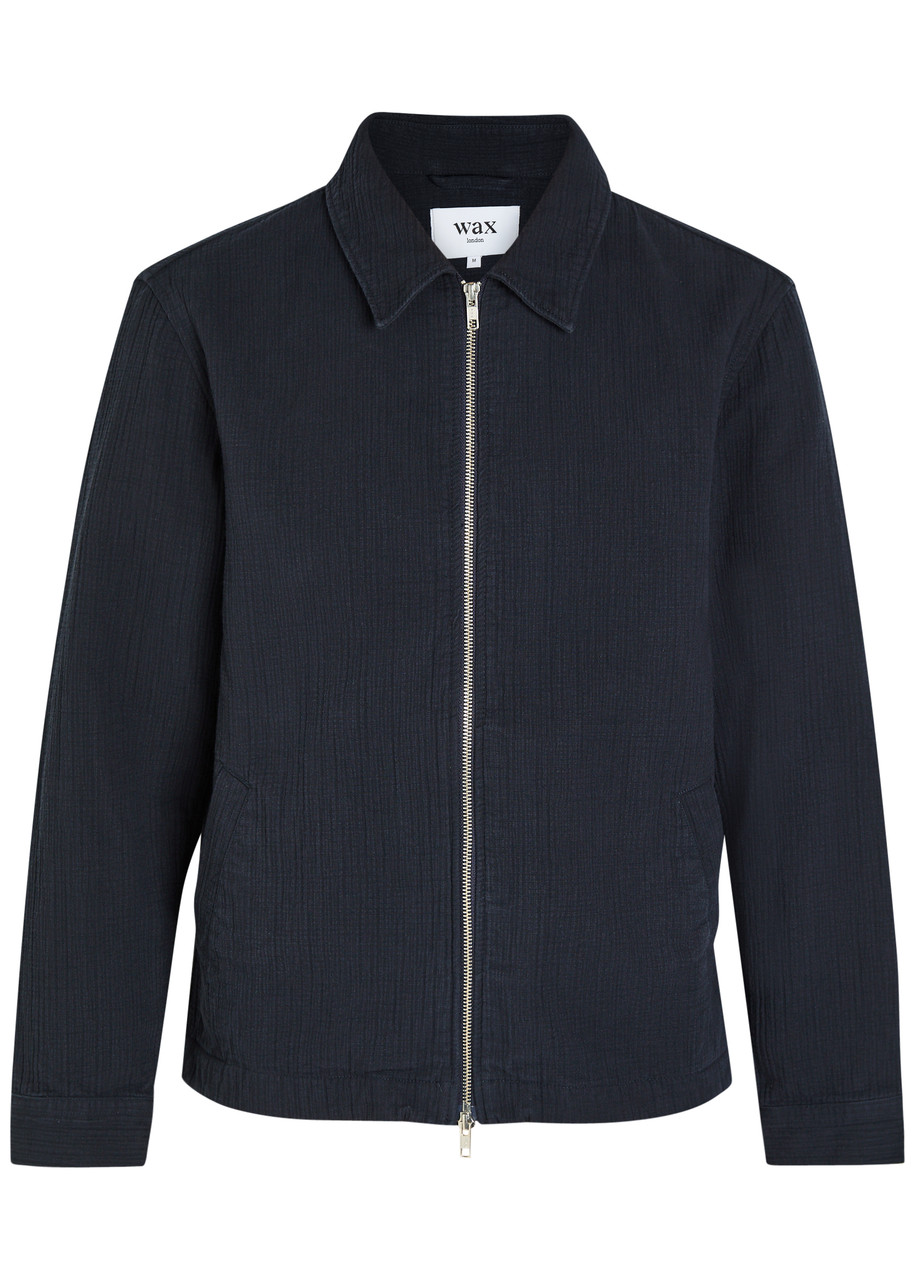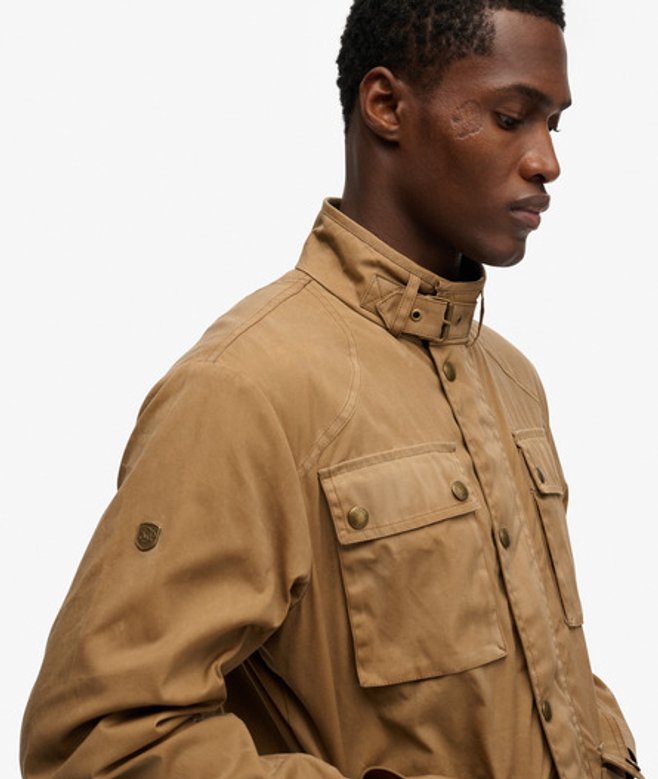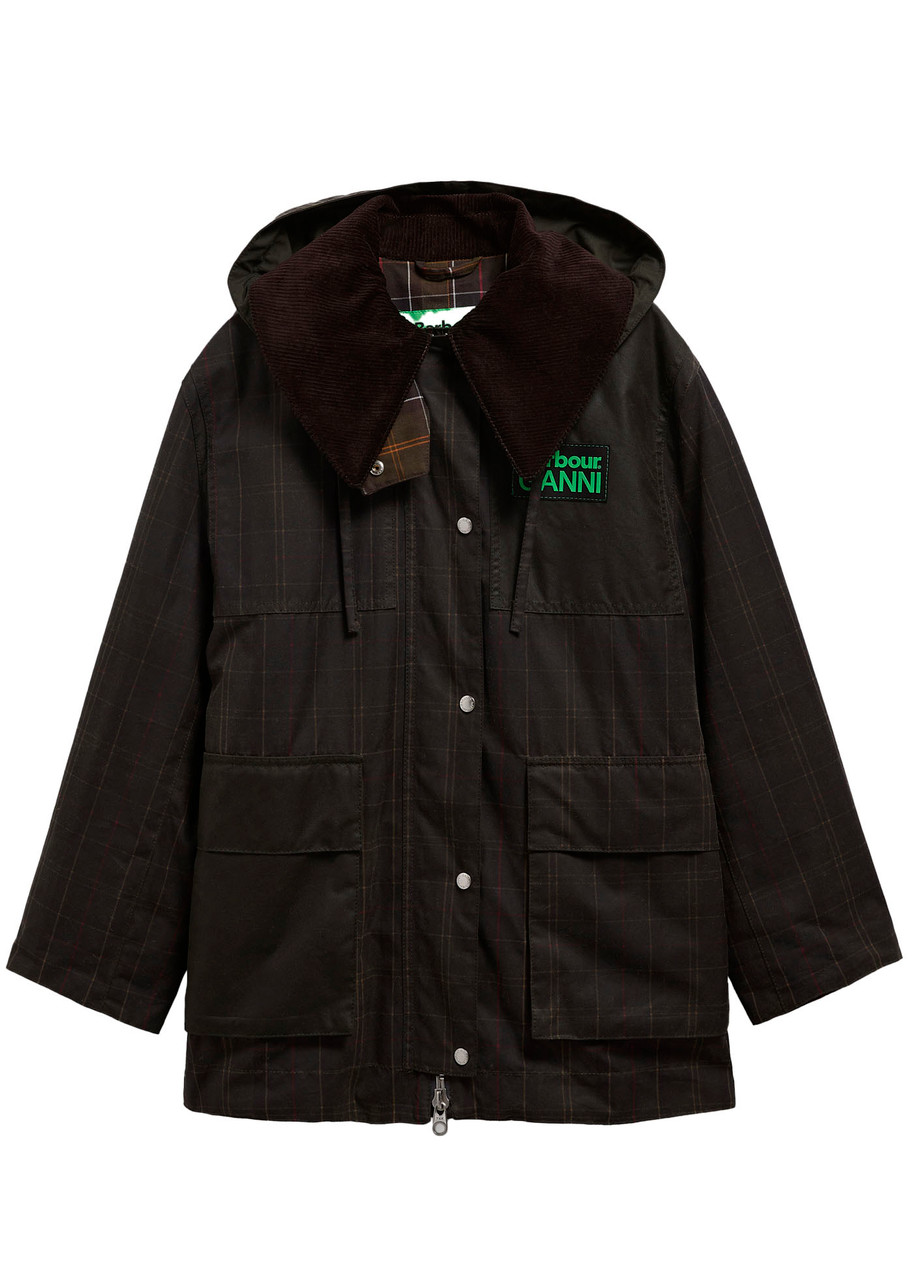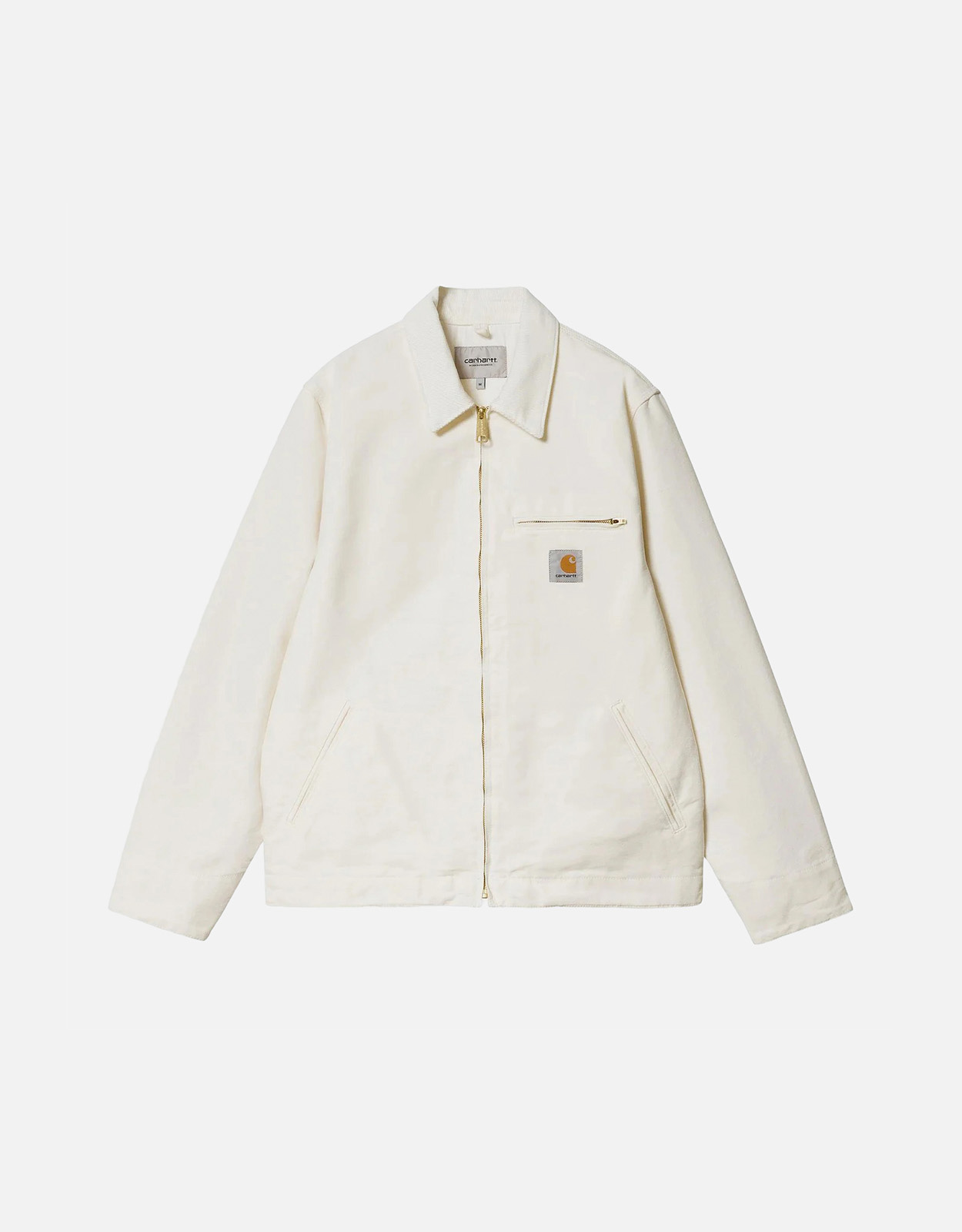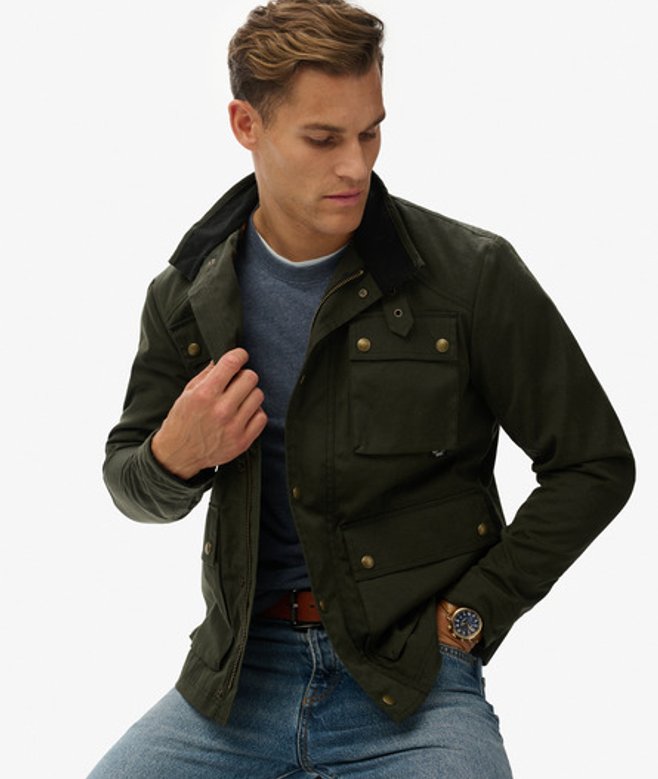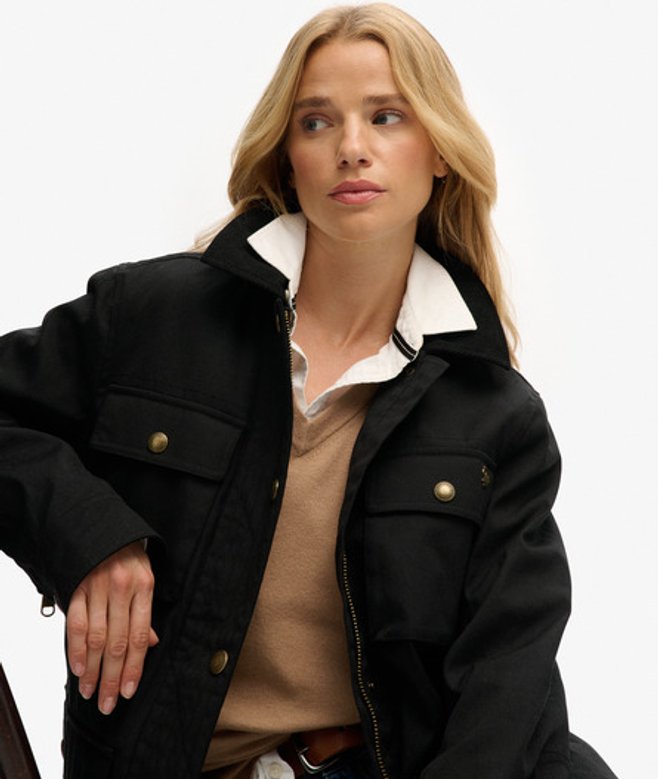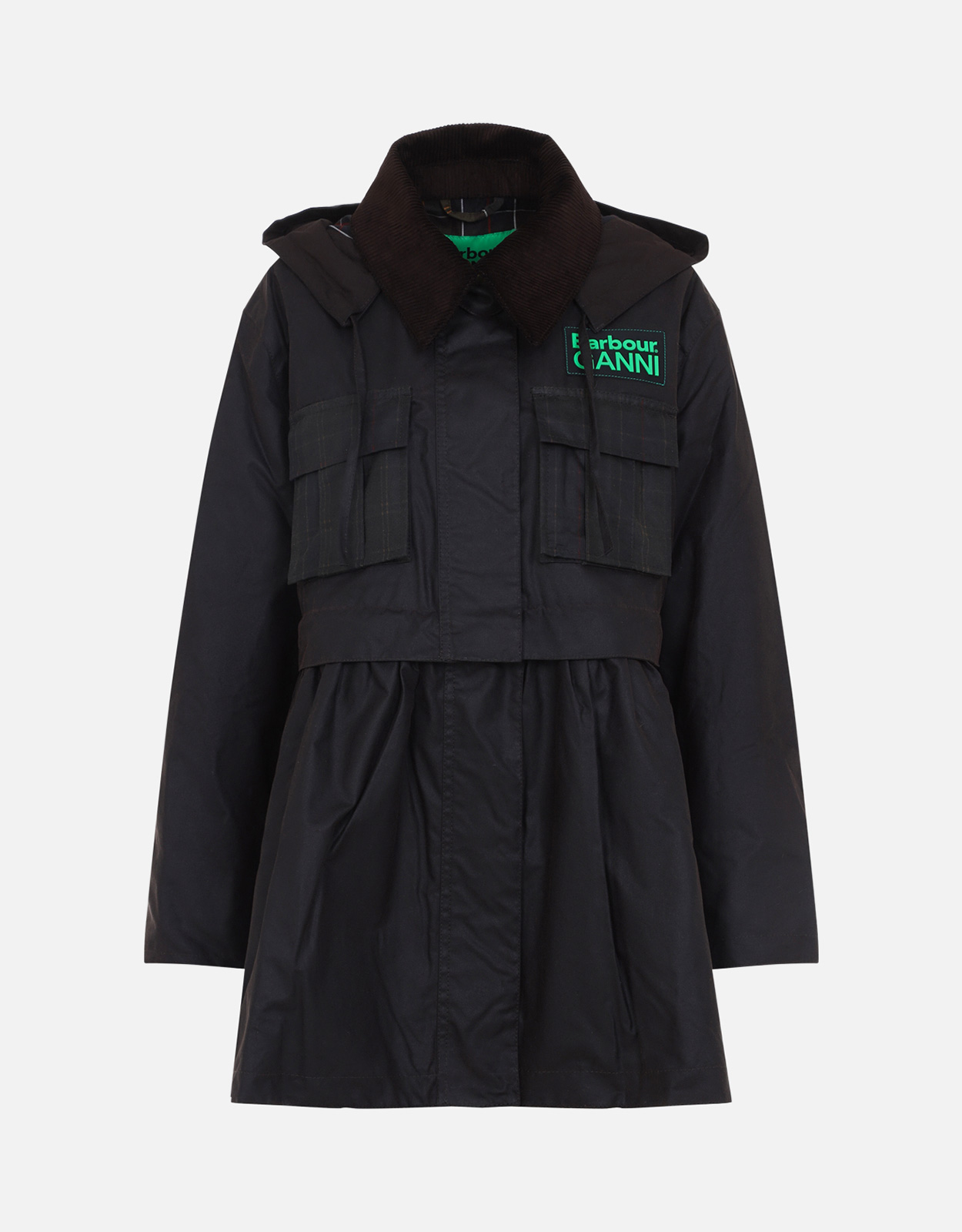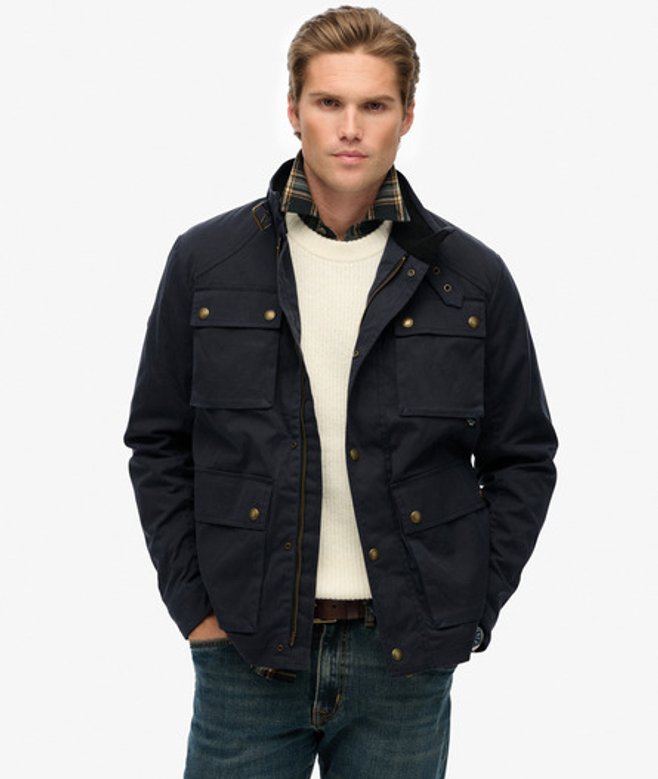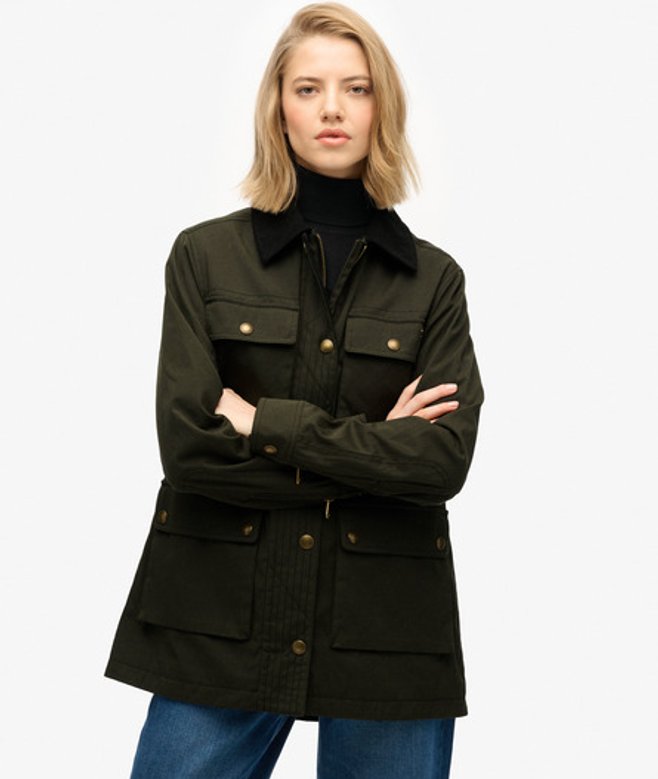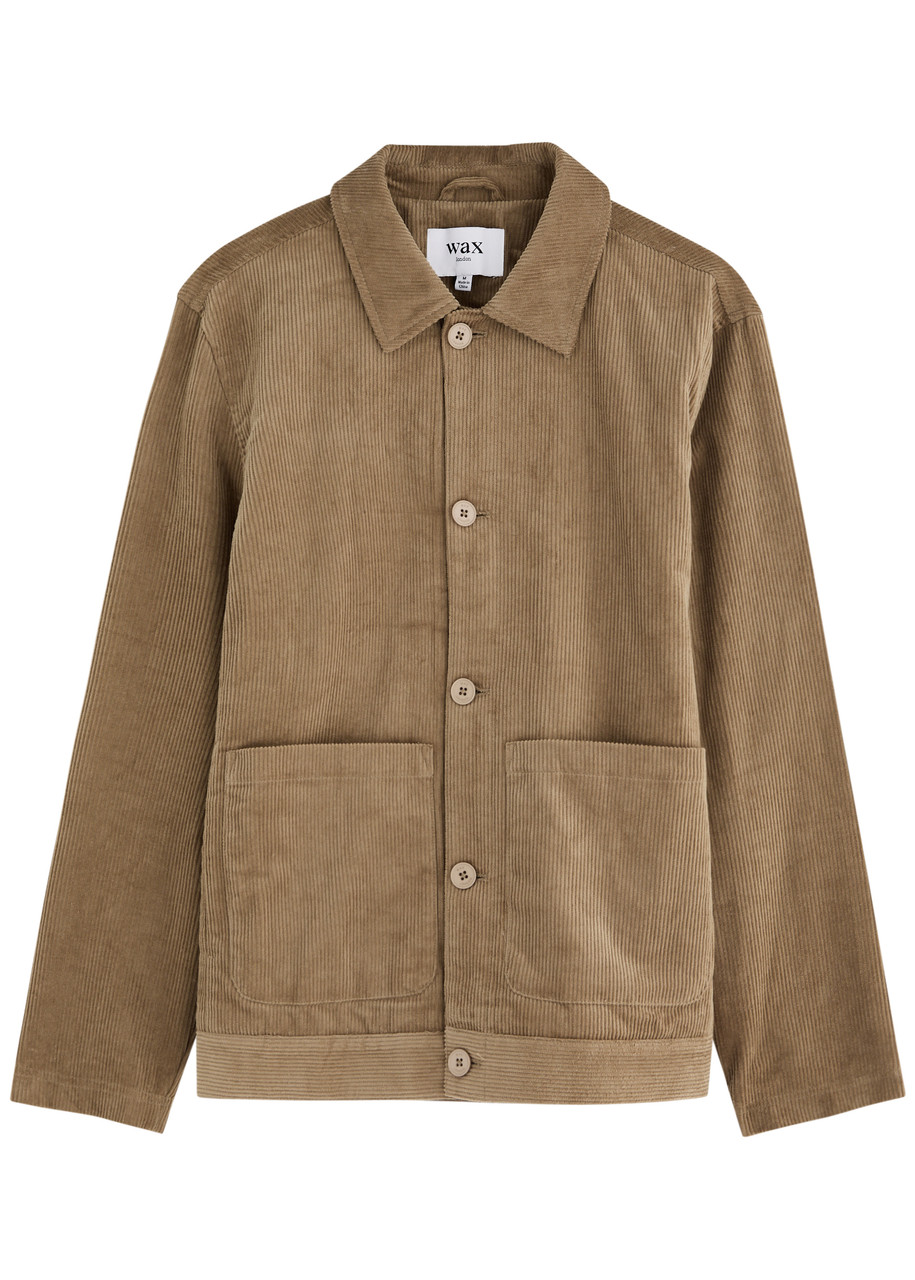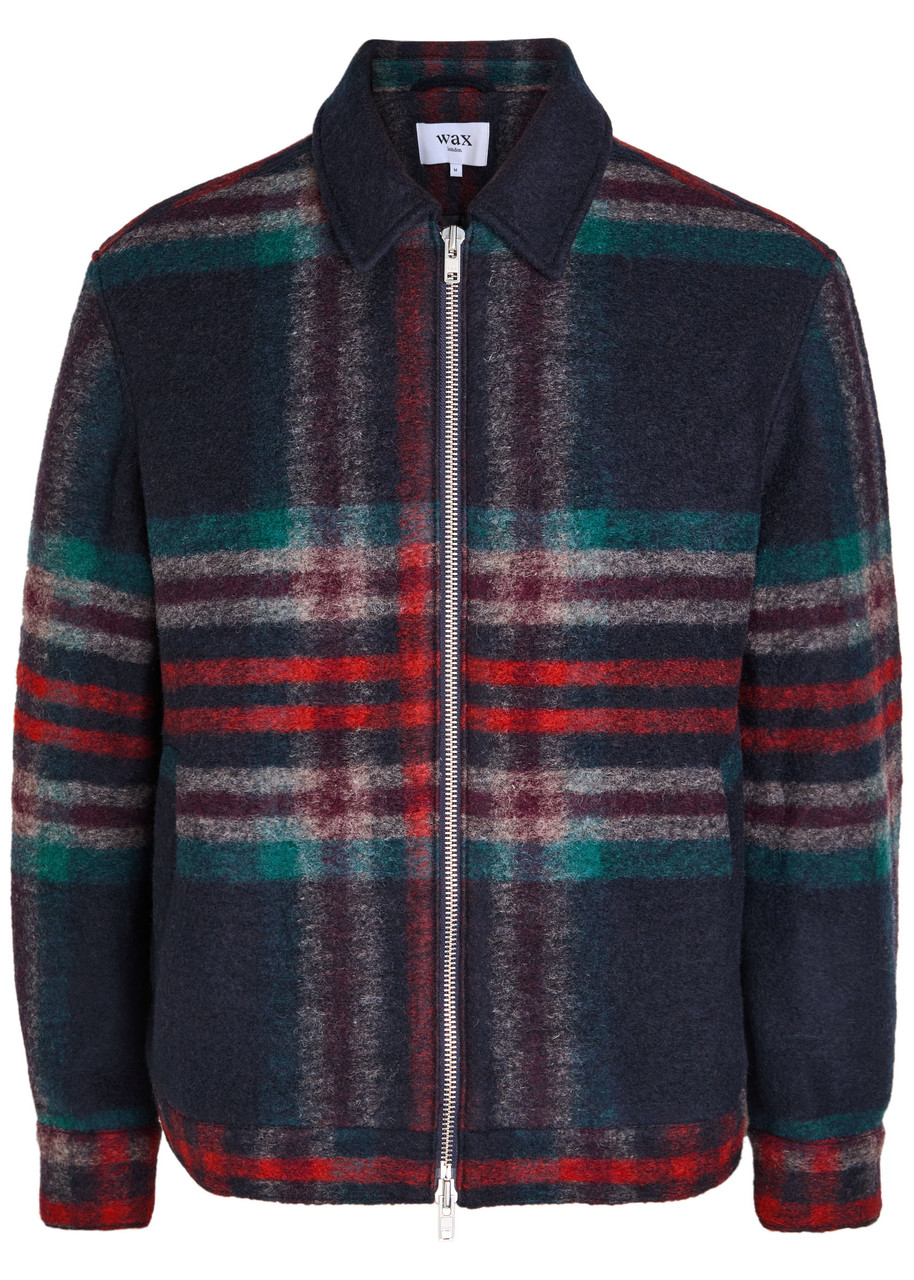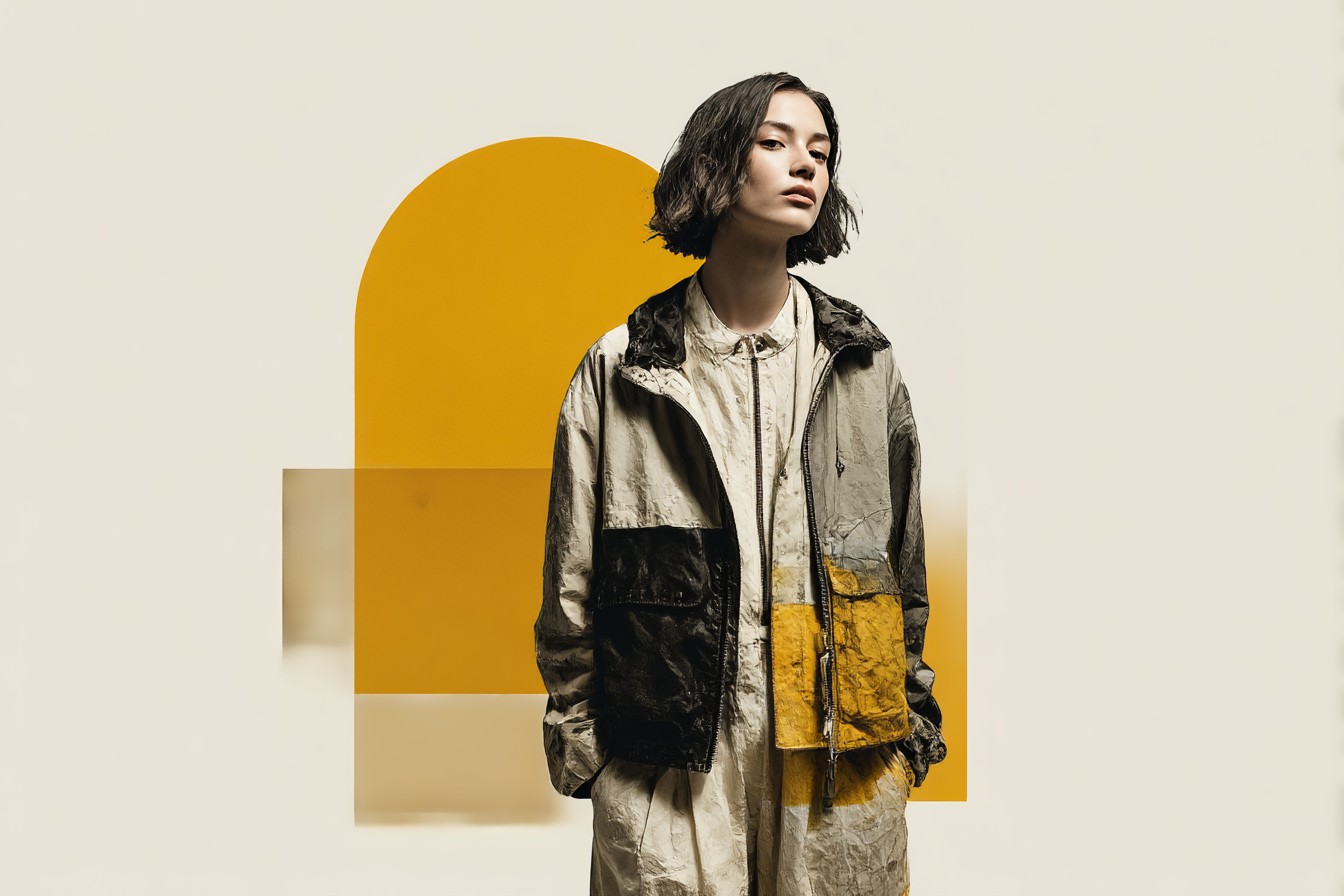
A good wax jacket announces itself through weight and smell before it ever gets to cut. That slightly resinous, outdoorsy scent and the stiffness across the shoulders when it is new are not flaws to work around, they are proof the cotton has actually been treated properly rather than given a light water resistant coating and called weatherproof. The wax should darken and soften with wear, particularly at the collar, cuffs and elbows, which is exactly where a cheaper version cracks and flakes instead. Corduroy collars matter too, both for warmth and for signalling that someone thought about how the jacket sits at the neck rather than just how it photographs flat.
Fit is where most people go wrong. This is not a tailored piece and should never be bought like one.
The best versions have room through the body and shoulders for a jumper underneath, sleeves that sit slightly long, and a hem that hits somewhere around the top of the thigh rather than skimming the waist like a cropped biker. Bought too fitted, it stops moving properly and loses the drape that makes wax jackets look considered rather than practical.
Bought too big, it reads like borrowed workwear rather than deliberate outerwear.
Styling it well means treating it as the roughest, most textural layer in an otherwise smooth outfit. A fine wool jumper, straight leg jeans and boots is the obvious combination and it works precisely because everything else is soft where the jacket is stiff. It sits equally well over tailoring for a countryside wedding or a knee length dress and thick tights for daytime events where the setting is outdoors but the dress code still has some polish to it. The internal check lining, when it exists, is worth checking for its own sake, since it adds a formality that a plain cotton lining does not.
Occasion wise, this is not a jacket for city drizzle alone. It earns its place at point to points, dog walks, market mornings, garden lunches and any weekend that involves gravel, mud or wind rather than pavement. The ones worth paying for are the ones that look better after a few seasons outside than they did on the first day, which is the opposite of most outerwear and exactly the point.
Top Picks